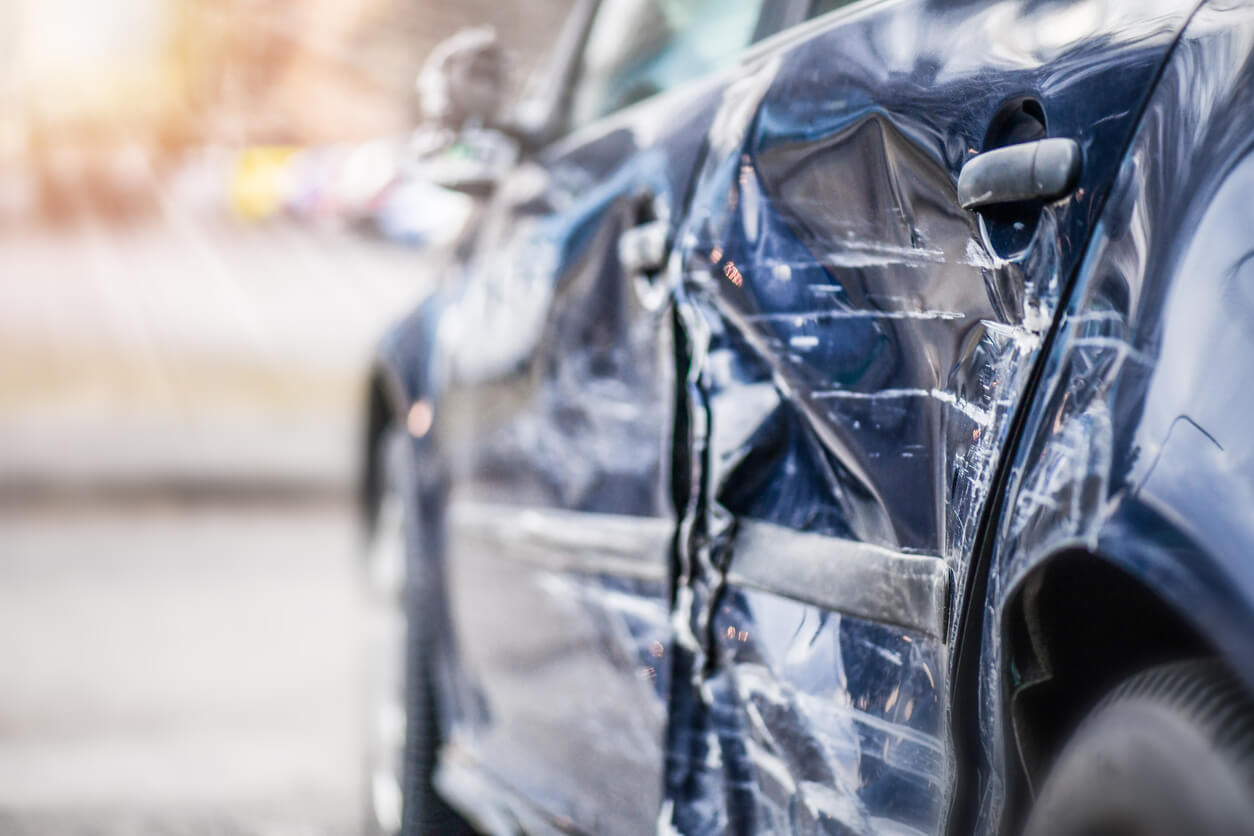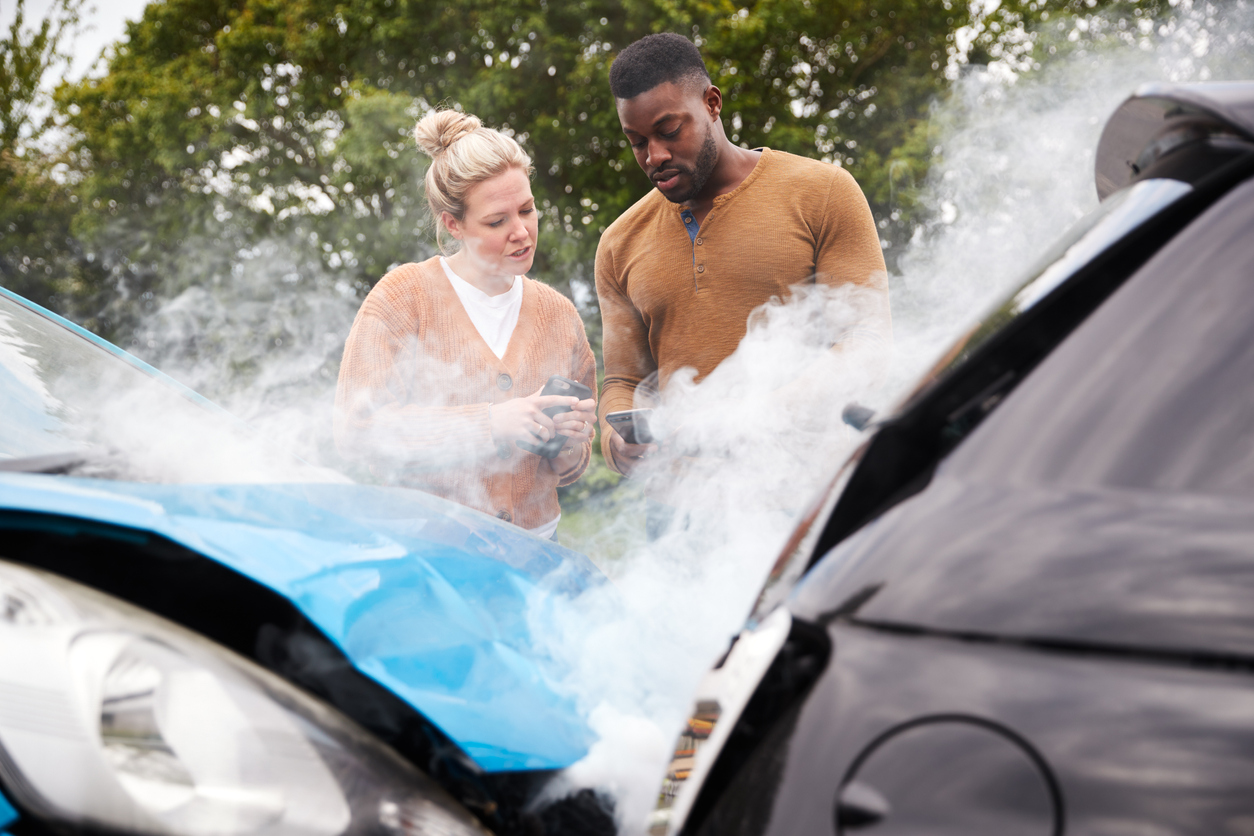
blue car in accident

How Does UM/UIM Coverage Work?

When signing up for automobile insurance, it can be easy to be overwhelmed and confused by your options. The tangle of coverage choices can be difficult to unravel. Understanding your car insurance options and getting the right coverage you need, however, is incredibly important. That is why we are going to focus our discussion here on one of your coverage options, Uninsured/Underinsured (UM/UIM coverage), and how it works

Overview of UM/UIM Coverage

Let us begin our coverage conversation with the automobile insurance requirements that Pennsylvania drivers are subject to. For starters, all Pennsylvania drivers must carry bodily injury liability coverage in the amounts of $15,000 per person and $30,000 per accident. Should you injure someone in a car accident you cause, this coverage will go towards paying for the person’s medical expenses and other related damages. Additionally, you are required to carry $5,000 in property damage liability coverage which will pay for someone else’s property damage in an accident you are at fault for causing. You are also required to carry first-party benefits of $5,000 which will go towards paying for your medical bills regardless of who is at fault in causing the accident. You can always opt for higher limits as well.

When signing up for automobile insurance, you are required to be offered minimum Uninsured/Underinsured motorist coverage of $15,000 per person and $30,000 per accident. In Pennsylvania, UM/UIM coverage is optional, but you must explicitly request to reject this coverage option. Even though UM/UIM coverage is optional, it should still be seriously considered. When considering whether or not to carry UM/UIM coverage, it is helpful to understand how it works.

UM coverage comes into play should you be hit by an uninsured motorist or should you be injured in an accident caused by a hit and run driver that cannot be located. The most recently released data from the Insurance Information Institute states that approximately 13 percent of motorists in Pennsylvania are uninsured. This means your chances of being injured in an accident caused by an uninsured driver are pretty solid. Should this happen, you can make a claim with your UM carrier seeking compensation for losses you sustained in the accident.

UIM coverage comes into play when you are injured in an accident caused by a person who does not carry enough insurance to adequately compensate you for your damages. In this case, you must first exhaust the insurance limits of the at-fault party. Once you have done so, you can make a claim with your UIM coverage carrier for the damages that remain unpaid.

Philadelphia Personal Injury Attorneys

The personal injury attorneys at Cooper Schall & Levy are committed to protecting and fighting for the best interests of you and your loved ones. If you have been injured in an automobile accident, we will explore every possible avenue of recovery to help ensure that you are properly compensated for your losses. Contact us today.

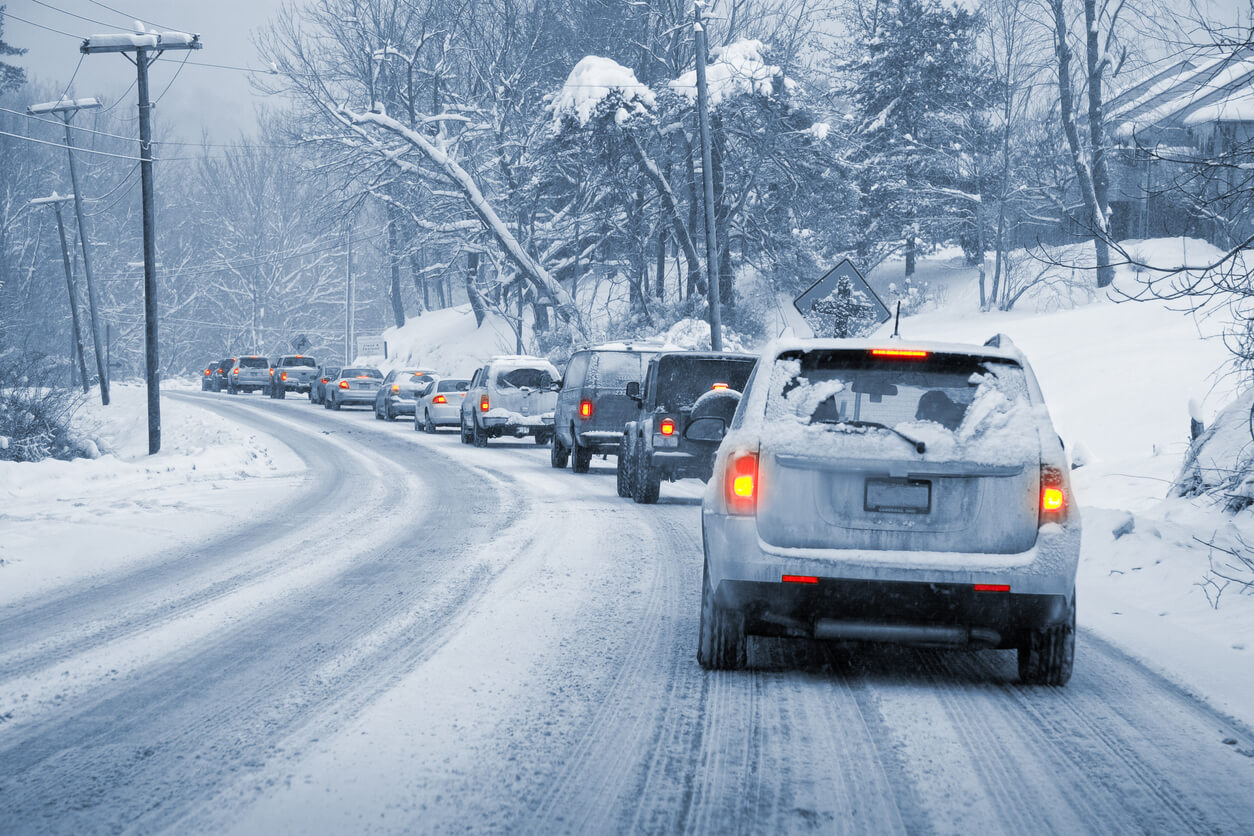
icy/snowy roadway

Winter Roadway Dangers

Here in Philadelphia, we are no strangers to harsh winter weather conditions. As the last leaves fall from the trees, we brace ourselves for a long, cold winter ahead. While many of us have spent our lives learning to drive in adverse winter weather conditions, it can be far too easy to become complacent about this. Let us take a moment to refresh and learn about some ways to deal with winter roadway dangers so we can help keep each other safer on the roads this winter.

Common Road Hazards During the Winter

Winters in Pennsylvania can mean snow, ice, sleet, and freezing temperatures. Blizzards, heavy snow, and other weather conditions can seriously reduce visibility on the roads, increasing the risk of an accident. Furthermore, snow piled up on the roadways can make it difficult for drivers to see things like traffic signs, as well as pedestrians and other vehicles

Slippery roadways also are a significant winter roadway danger. Iced over roads, particularly black ice that is not as visible to drivers, can present as a particularly dangerous winter roadway condition. The icy roads significantly reduce the car’s ability to maintain traction, increasing the likelihood of the car spinning out of control. Icy roadways also reduce a car’s ability to brake quickly to avoid things like rear-ending or hitting another vehicle.

The freezing temperatures can also be dangerous for drivers, particularly drivers who may be experiencing car troubles and must wait on the side of the road for assistance. Without proper preparation, you can find yourself exposed to these freezing temperatures without the necessary gear to help you cope with them and this can take a significant toll on your body.

Car maintenance issues also tend to become exponentially more dangerous in the winter months. Worn-out tires mean poor traction on top of potentially slick or icy roadways which can be a combination for disaster. Additionally, things like broken headlights, windshield wipers in disrepair, or broken defroster fans can have a significant impact on your ability to safely navigate through winter weather conditions.

To avoid or reduce the risk associated with these winter roadway dangers, you should be prepared to eliminate all unnecessary travel depending on the weather forecast. If you must drive during poor winter weather conditions, be sure to keep a winter emergency travel kit in your vehicle. Keep your gas tank at least half full at all times and be sure to reduce your speed as well as increasing your following distance

Before you head out on winter travels near or far, be sure to tell someone else where you are going as well as your estimated arrival time. This can be helpful should you need emergency assistance as someone will know generally where to look for you. Should you become stranded, remain with your vehicle until assistance arrives. Make sure your tailpipe is clear, crack your windows and run the engine about every hour.

Philadelphia Personal Injury Attorneys

At Cooper Schall & Levy we want you and your loved ones to stay safe this winter and all year long. Be safe out there, especially as icy weather conditions are soon on their way. If you are injured out there on our winter roads, we are here to help. Contact us today.

man with whiplash

What Is Whiplash?

Have you heard of whiplash? Many may have but are unfamiliar with what it is exactly. People usually know that it involves some kind of neck pain and that it is commonly associated with auto accidents. There is, however, much more to whiplash. Here, we go into further detail regarding the causes of whiplash, its symptoms, and your treatment options.

Understanding Whiplash

Whiplash is named as such because the injury occurs when the head moves suddenly backward and forward, essentially cracking it like a whip. Because whiplash is caused in this way, it may come as no surprise that it is commonly sustained in rear-end car collisions. It is also a common sports injury. When the head and neck are forced into such a rapid movement, the muscles and ligaments, which are soft tissues, in your neck are extended beyond what the usual range of motion is for them. The stretching and tearing of these soft tissues is what is at the heart of whiplash.

One of the dangerous things about whiplash is that the full symptoms of this injury may not present themselves until a few days after you are in an accident. This is why it can be so important for you to seek immediate medical attention after an accident even if you feel pretty normal right after. When you seek medical treatment right away and get the follow-up evaluations and care you need, it is more likely to have your whiplash injury, as well as other injuries, identified and the proper treatment plan prescribed which will help you have a faster more effective recovery time.

Common whiplash symptoms include:

  • Neck pain
  • Neck stiffness
  • Headaches
  • Blurred vision
  • Dizziness
  • Fatigue

Less common symptoms of whiplash include things such as difficulty sleeping, irritability, and ringing in the ears. To have your whiplash injury properly diagnosed, you need to be in clear communication with your doctors about the symptoms you are experiencing. Because whiplash is a soft tissue injury, it can be difficult to diagnose. To properly diagnose whiplash, your doctor will rely heavily on your description of the symptoms you are experiencing. You describe your symptoms to your doctor, radiographic studies and other tests, such as x-rays, will be ordered to see if your symptoms may be due to some other type of injury. CT scans and MRIs will show if there is any damage or inflammation present in your soft tissues, spinal cord, or surrounding nerves.

For treatment options, there may be a range available to you. You may be prescribed pain medication for more serious cases or over-the-counter pain medication. Hot and cold therapy, as well as chiropractic care, massage, and acupuncture, may also be effective in addressing your symptoms. Proper posture and stretching can also have a beneficial impact on the injury.

Philadelphia Personal Injury Attorneys

If you have sustained a whiplash injury in a car accident, it is crucial for you to get the medical care you need. This is not just because it can be essential to recovering from your injuries, but it can also help preserve the value of your personal injury claim. For more assistance in enforcing your right to receive full and fair compensation for your auto accident injuries, the dedicated personal injury team at Cooper Schall & Levy is here for you. Contact us today.

parking lot

Parking Lot Accidents

It might not seem like it, but parking lots can be dangerous places. The often small space of a parking lot can be quickly filled with any number of hazards such as pedestrians (some of whom are very distracted and not paying attention), other vehicles (some of whom are very distracted and not paying attention), poorly marked travel lanes and obstructions like shopping carts, curbs, etc. With so much going on in such a small area, accidents can happen all too easily. While parking lot accidents often occur at low speed, they can still lead to significant property damages and injury. Pedestrians, in particular, are at risk of sustaining devastating injuries in parking lot accidents.

Parking Lot Accidents

There are several common types of parking lot accidents and, most of the time, liability is pretty easy to establish. Mainly, to establish liability in parking lot accidents, you look to whether a vehicle was stopped or moving and who had the right-of-way. If only one car involved in the accident was moving, it will usually be held responsible for the accident. If both cars were moving at the time of the accident, the driver who did not respect the right of way of the other vehicle will usually be held liable for the accident. Other factors, however, will come into play in establishing liability, including whether a vehicle was speeding or violating traffic signs or signals.

One common type of parking lot accident is when two drivers back out at the same time and, essentially, rear-end each other. Drivers have a responsibility to check behind them before backing out. Because both drivers involved had this responsibility, it is likely that, without other circumstances present, both will share in the liability of causing the accident. Drivers will also sometimes back out of spaces into a pedestrian behind them. This can be a particularly devastating situation as even a car backing out slowly can cause serious injury to a pedestrian. In this scenario, it is likely that the driver of the vehicle backing out will be found to be at fault for the accident.

It is also common that a driver will pull out of a parking space into traffic or back out of a parking space into an oncoming vehicle. In both of these cases, the oncoming driver has the right of way. This means that the driver backing out of the parking spot is most likely going to be found at fault for causing the accident.

To avoid being involved in a parking lot accident, always travel at a reduced speed in parking lots. Check your side mirrors to help ensure that you have minimized your blind spots. Pedestrians, in particular, can be difficult to see! Make use of your vehicle’s safety features, such as motion sensors and backup cameras when you are leaving a parking space. Be clear with other drivers about your intentions by properly signaling. Finally, comply with parking lot signs and always check more than once for pedestrians, other vehicles, and other things before you back up.

Philadelphia Personal Injury Attorneys

Have you been injured in a parking lot accident? The trusted personal injury attorneys at Cooper Schall & Levy are here for you. Contact us today.

Car that was in a T-Bone accident.

What Is a T-Bone Accident?

Motor vehicle accidents cannot only be physically traumatic, but they can also be mentally traumatic. To be injured in such a sudden, jarring way can stay with you for a long time. There are many different types of motor vehicle accidents, all with different potential risks for those involved. One such common type of accident is the T-bone accident. Often the result of failure to yield or simple complacency on a driver’s part, T-bone accidents put drivers and passengers at high risk for sustaining serious injuries.

Understand T-Bone Accidents

A T-bone accident, also referred to as a broadside accident, refers to a situation where the front of one vehicle strikes the side of another vehicle. Unlike front end collisions or rear-end collisions, T-bone accidents place a unique risk on those in the vehicle with the side impact. The sides of a vehicle are the thinnest and most vulnerable points. The driver and passenger on the side of impact have the potential to sustain critical, if not fatal, injuries as a result of impact.

Victims of T-bone accidents often sustain head injuries, spinal injuries, and broken bones. Glass from shattered windows can cause serious cuts. The danger of a T-Bone accident doesn’t end at first impact, as there is a high risk that your car may careen off in another direction, into oncoming traffic or other obstructions, such as guardrails or telephone poles. This places another serious risk of injury on the vehicle passengers. In some cases, the force of impact causes the vehicle to overturn. Overturned vehicles may even be knocked down a sloping shoulder of the road.

Broadside accidents most often happen at intersections. A driver may fail to stop at a traffic signal, or fail to yield the right of way to another driver. Other times, the at-fault driver makes a left turn at the intersection when it is unsafe to do so, placing oncoming vehicles at risk. The result can be the negligent driver plowing into the side of the other vehicle. While it is usually the driver who strikes the side of the other vehicle found to be at fault for causing the accident, it is not always the case. The other car may be found partially or totally at fault for a number of reasons. For instance, if they were running a red light, failing to yield right of way, or otherwise engaging in reckless driving, they may be held liable for the accident and thus may carry at least partial responsibility for compensating injured parties.

Pennsylvania Personal Injury Attorneys

If you have been injured in a T-bone accident, you may have sustained significant injuries. After experiencing the physical and mental trauma of being an accident injury victim, you can lean on the dedicated personal injury attorneys at Cooper Schall & Levy. We are here to provide you with legal support to help you recover full and fair compensation for your injuries and other losses. Contact us today.

Doctor explaining spinal cord injury caused by car accident.

Spinal Injuries Caused By Car Accidents

Spinal injuries can have devastating effects on a person’s health, well-being, and life. Unfortunately, spinal injuries are commonly sustained in motor vehicle accidents. The force of impact felt by vehicle occupants can wreak havoc on the spinal column. The results are often painful and can result in difficulties with daily living activities, such as driving, walking long distances, or completing household chores. If you have sustained a spinal injury in a car accident caused by the negligent actions or inaction of another, you may be able to receive compensation for your injuries to help recover the losses associated with medical care as well as other life changes and losses associated with your injuries.

Spinal Injuries Caused by Car Accidents

While the entire body is at risk of injury in a car accident, spine injuries not only appear to be the most common, but also the most severe. The spinal cord consists of bundles of sensitive nervous tissue encasing the vertebrae. In a car accident, the tissue, discs, and vertebrae of the spinal column are all at risk of injury.

Whiplash is a common soft tissue spinal injury often associated with car accidents. Whiplash occurs as a result of the head being pushed forward and rapidly snapping back. It usually localizes in the neck, but it can also run down to impact the rest of the spine going down the back. A whiplash victim may also experience other trauma to the spine in addition to the whiplash injury.

Herniated discs are also common spinal injuries caused by car accidents. There are soft discs between vertebrae that prevent the vertebrae from rubbing together, causing painful friction. If impacted in a car accident, these discs may herniate or rupture. Without this spongy buffer between the vertebrae, the rubbing together of the discs can cause a person to experience numbness and severe, radiating pain throughout different parts of the body.

In some car accident cases, the vertebrae itself may be fractured. The pressure on the spine caused by the force of impact in a car accident can cause a compression fracture of the spine. Like a herniated disc, a spinal fracture can result in numbness and radiating pain. Spinal injuries may also result in paralysis or difficulties breathing. It can also impact things like bladder control. Those accident victims suffering from a spinal fracture may need surgery to address the injury. Physical therapy is also likely necessary in order to recover as much as possible from the injury.

To protect yourself and car passengers against spinal injuries should you be involved in a car crash, always wear your seatbelt and have passengers do the same. Make sure that children are properly situated in car seats. For older children, they should be in booster seats or properly fitted seatbelts depending on their size. Additionally, make sure your airbags are fully operational. Be a defensive driver and follow all rules of the road.

Pennsylvania Personal Injury Attorneys

Even when we are doing everything we can to keep ourselves and our passengers safe on the road, the negligent actions of another can lead to car accident injuries. If you have been injured in a car accident, talk to the trusted attorneys at Cooper Schall & Levy. We are here to fight for you. Contact us today.

Two people involved in rear-end collision.

Common Causes of Rear-End Collisions

All too often, rear-end collisions get dismissed as nothing serious. This is far from true. Rear-end collisions have the potential to have devastating, even fatal, consequences. Every measure to try and avoid rear-end collisions should be taken. To do this, let us take a look at the common causes of rear-end collisions in the hopes that this information will help all of us take the necessary safety precautions to avoid them on the road.

How Are Rear-End Collisions Typically Caused?

One of the most common causes of rear-end collisions is following the care in front of you too closely, or “tailgating.” Tailgating leaves little room for a driver to react should the car in front suddenly stop or slow down. The result is the tailgating vehicle slamming into the back of the other car, putting occupants of both vehicles at risk of injury.

Another common cause of rear-end collisions is driving while distracted. If a person is busy checking a phone or changing the channel on the radio, they are not fully paying attention to what is going on around them. It only takes a moment of distraction to block a person from seeing that a car in front of them has put on their brakes leading to a rear-end collision. Any type of distraction, whether it be visual, mental, or physical, will substantially increase the risk of collision.

Failure to obey traffic laws can also easily result in a rear-end collision. This includes failure to observe traffic signals. If the car in front of you has come to a stop at a stop sign or traffic light that you have failed to observe, a rear-end collision is likely to occur. Furthermore, failure to observe speed limits also increases the chances of a rear-end collision. Speeding makes it more difficult to stop in time to avoid colliding with the vehicle in front of you should you need to do so.

Anything that causes delayed reaction time in a driver is also a contributing factor in causing a rear-end collision. This includes driving while fatigued. When you are tired, your reaction time is significantly slowed. Additionally, driving while intoxicated or under the influence of drugs can greatly slow reaction time, increasing the risk of a collision such as causing a rear-end collision.

Let us all take steps to reduce the chances of rear-end collision by being alert, defensive drivers. Rear-end collisions may cause serious injury to any vehicle passenger involved. Some of the more common injuries associated with rear-end collisions include:

  • Whiplash
  • Neck injuries
  • Shoulder injuries
  • Head injuries
  • Back injuries
  • Broken bones
  • Internal bleeding
  • Internal trauma
  • Knee injuries

Never dismiss a rear-end collision as a fender bender in an attempt to dismiss injuries you have sustained. Even if you are feeling just a little sore after an accident, you may have sustained substantial injuries that have yet to fully manifest themselves. Make sure you address your health care needs properly by seeking immediate medical attention following an accident, then contact the team of lawyers at Cooper Schall & Levy.

Pennsylvania Personal Injury Attorneys

At Cooper Schall & Levy we represent rear-end accident victims. We are here to fight for your legal rights so that you can focus on your health and well-being. Contact us today.

Woman patient at doctor after car accident.

Why Seek Immediate Medical Treatment After a Car Accident?

Car accidents can cause serious injuries that have long-lasting impacts on your health and well-being. The physical and emotional pain may never fully go away. After an accident, you may very well be disoriented, confused, and overwhelmed. You may be unsure of what to do next. Remember this, one of the most important things you can do after an accident is to seek immediate medical treatment.

Seeking Medical Treatment After a Car Accident

After an accident, seek immediate medical treatment. This is true whether you are in intense pain or only feel minor pain. The adrenaline triggered by an accident can all too easily mask the true severity of an injury. Additionally, some injuries may take time to fully manifest themselves. For instance, a head injury may not appear to be a problem at first, but symptoms may develop over the next day or multiple days. While some evidence of a head injury may appear immediately, such as a bruise, other times damage is sustained without symptoms immediately appearing. Waiting to seek treatment may mean that your head injury is not diagnosed till later or goes undiagnosed altogether. Either way, this poses serious dangers to your health.

Failure to seek immediate medical treatment after a car accident not only jeopardizes your health, but it also jeopardizes your potential to recover compensation for your losses. Should you wish to pursue a claim for personal injuries caused by a car accident, failure to seek immediate medical treatment will be used by an insurance company to undermine or outright deny your claim. An insurance company is likely to assert that this is proof that your injuries are inconsequential. It also gives them a reason to assert that this is evidence that your injuries are likely to have been caused by something other than an accident or they were pre-existing injuries. The record generated by your initial visit for medical evaluation and treatment will act as significant evidence that you were injured in the car accident.

It is also important to seek follow up medical care as prescribed by your treating physicians. Medical records are the main pieces of evidence in a personal injury claim. They are used to support the assertion that an accident was the direct cause of your injuries and other losses. Failure to receive consistent, prescribed follow-up care will most definitely be used to undermine or deny your claim. In the eyes of an insurance company, if you are not getting the care your doctor prescribes, you are not that injured. We all know that there are countless other reasons why you may not have gotten follow-up treatment, but these reasons will be most likely completely inconsequential when it comes to valuing your case.

Pennsylvania Personal Injury Attorneys

For your health, seek immediate medical treatment after being in a car accident. To preserve the value of your personal injury claim, seek immediate medical treatment after being in a car accident. Focus on your health. This is your priority. Let the dedicated personal injury attorneys at Cooper Schall & Levy focus on the legal fight. We stand up to insurance companies so that our clients may receive full and fair compensation for their injuries. Contact us today.

Woman looking at the damage to her car from a hit and run accident.

How Do You Recover Compensation in a Hit and Run Accident?

Few things are scarier than being involved in a hit and run accident. You are left alone at the scene. You may be injured. You may have difficulty processing what just happened. On top of the hurt and trauma that comes with being hit by a driver that flees the accident scene, you have the added stress of considering how you will cover all of the costs that can come following an accident. Who will pay for your medical care? This question can plague accident victims and this is even more true when the party responsible for the accident flees the scene.

I was just in a hit and run accident, how do I get compensation?

A person can run from an accident scene for a number of reasons. He or she may have been intoxicated or had a suspended driver’s license. The person may have been operating a stolen vehicle or had outstanding warrants out for arrest. Whatever the reason for leaving the accident scene, an accident victim left behind carries the burden of the hit and run driver’s negligence. If you have been involved in a hit and run accident, you can take steps to help find the driver who left the scene. You may be hurt and in shock. Do whatever you are able to under the circumstances. Try taking a photo of the other vehicle. Call the police and report the hit and run. Provide a description of the vehicle that is as thorough as possible. Note things such as the make, model, and color of the vehicle. It is often possible for the police to locate the vehicle that caused the hit and run accident.

If the hit and run driver is found, then you may seek recovery for your injuries through pursuing a bodily injury claim under his or her insurance coverage. If the hit and run driver does not have any insurance or the driver is never located, you will have to rely on your own insurance coverage to pay for your expenses resulting from the accident. Pennsylvania is a no-fault state which requires drivers to carry $5,000 in medical benefits insurance coverage. This coverage will help cover your medical bills after an accident regardless of who was at fault for causing the accident. Should you require more medical coverage, you may be able to file an uninsured motorist (UM) claim.

UM coverage is not required in Pennsylvania, but our office strongly recommends that clients purchase this additional coverage. All too often drivers choose to operate vehicles despite not having the required auto insurance coverage. Other times, drivers leave an accident scene. In either of these cases, your UM coverage would be available to you. If you are the victim of a hit and run accident and you have UM coverage, you can make a claim under your UM coverage to help you pay for expenses associated with the accident.

Pennsylvania Personal Injury Attorneys

If you have been the victim of a hit and run accident, the team of trusted personal injury attorneys at Cooper Schall & Levy will help you pursue every avenue of recovery. We are here to help you in your time of need. Contact us today.


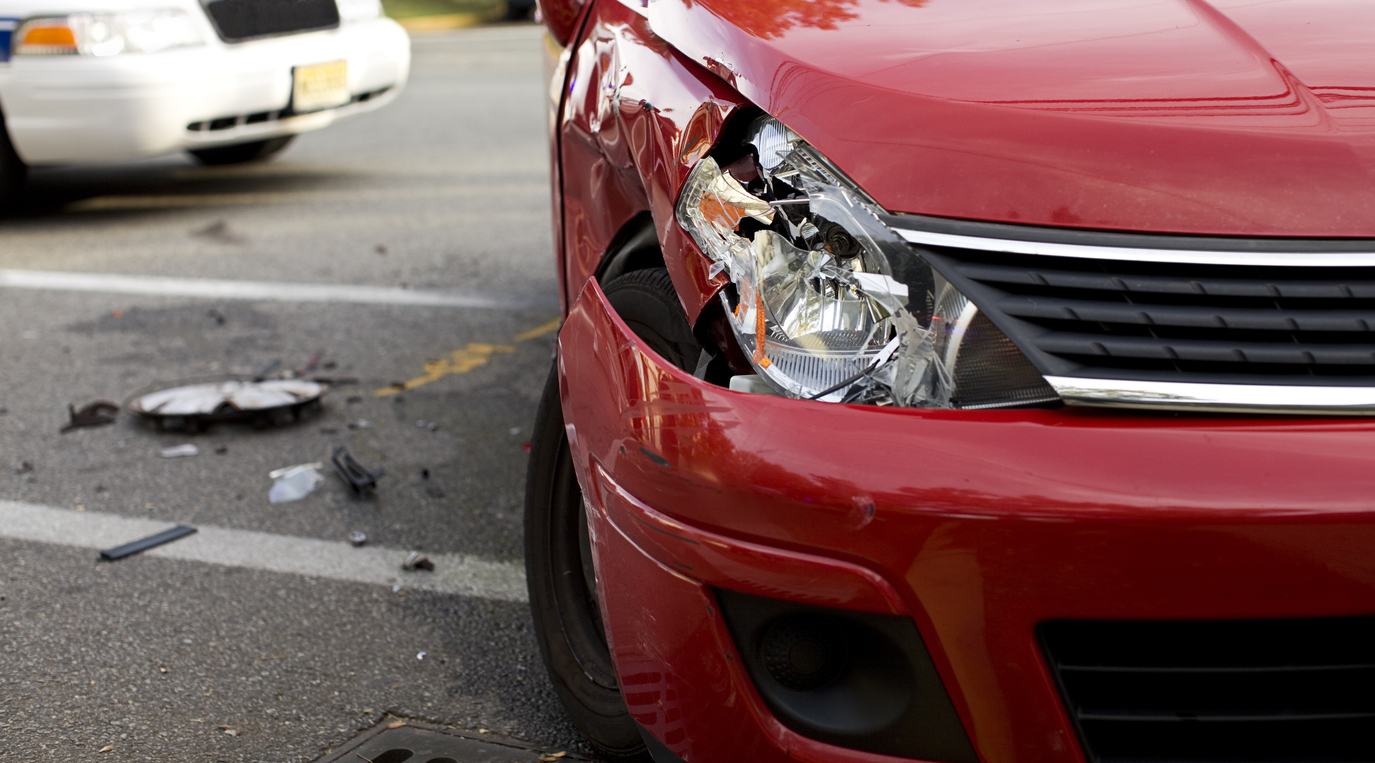
Red car with broken headlights

How to Determine Fault in a Car Accident

If you have been injured in a car accident caused by the negligent action or inaction of someone else, you may be able to pursue a personal injury claim seeking compensation for the harm you have incurred. Determining who is at fault for a car accident, however, can be complicated. There can be many different parties involved and this issue can be difficult to unravel. Who is at fault for causing a car accident, however, is critical as it will determine who will be on the hook, or whose insurance carrier will be on the hook, for paying your damages.

Determining Fault in a Car Accident

There will be several different parties looking to determine who is at fault for an accident. First, the police will look to decide who is at fault. When they arrive at the accident scene, law enforcement will immediately gather evidence to determine who is at fault for the accident. This will include getting statements from the parties involved as well as witnesses. There may be tickets issued for any traffic violations. The official police report generated by the police arriving at the accident scene will play a central role in your personal injury claim. It is an impartial description of the accident. However, oftentimes the police investigation yields no determinative conclusion as to fault. 

Insurers of the parties involved in the accident will utilize things like the police report to make their own determination of who is at fault for an accident. An insurer, however, is likely to look at any evidence that could potentially exonerate them of responsibility for paying injury claims resulting from the accident. If a settlement cannot be reached with an insurance company, a personal injury claim may go to court and the judge, arbitrator(s), or jury will decide who was at fault for the accident and, therefore, who needs to pay and who needs to be paid. As the plaintiff in a personal injury case, you will be able to provide evidence to support your narrative of how an accident occurred. This is why it is important to gather your own evidence at the accident scene if you are able to. Take pictures, get the names and contact information of any witnesses, and write down any accident details you recall as soon as possible. These can be important pieces of evidence in support of your case.

In most instances, it will be found that one driver was at fault in causing an accident. This, however, is not always the case. Sometimes, more than one person is found to be at fault, including the plaintiff who is seeking compensation from another party. In these instances, it is important to be aware of Pennsylvania’s modified comparative negligence standard. Under the modified comparative negligence rule, the plaintiff in a personal injury case can only recover from the defendant if his or her percentage of fault in causing an accident is less than 51 percent. In other words, if a plaintiff assigned a percentage of fault that is 51% or greater, he or she will be unable to recover compensation from the defendant for damages sustained in the accident. If the plaintiff is 50% or less responsible, recovery is still possible, but it will be reduced by the percentage of fault he or she has been assigned.

Pennsylvania Auto Accident Injury Attorneys

Personal injury cases are not cut and dry. Every case is different and requires a fact-intensive analysis to make sure things are done right. You want to be able to pursue full and fair recovery from the correct parties. This can be complicated. That is why the team of trusted auto accident injury attorneys at Cooper Schall & Levy tirelessly work to make sure we fully protect the best interests of our clients. We fight to make sure that the responsible parties are held accountable for the damages they have caused and that our clients are properly compensated for their losses. Contact us today.