Winter Road Accidents

Well, Pennsylvania, our winter season remains in full swing. Those of us who grew up here are more than familiar with how treacherous the roads can get this time of year. The ice, snow, and sleet make visibility difficult and wheel traction difficult to come by. The influx of holiday traffic can add to the hazards, especially when you consider how many visitors to the state may not be as familiar with icy winter driving as our residents usually are. Regardless of whether you have lived in Pennsylvania your whole life, are a newer transplant in the state, or will be coming for a family holiday here this winter, being aware and prepared for the dangers of winter driving that can lead to devastating accidents can help keep you and everyone else safe this winter season.

Winter Road Accidents

With ice and sleet commonly in the winter forecast, it is important to be aware of just how much your visibility on the road can be impaired by these conditions. Snow can stick to your windshield and make it difficult to see your surroundings as well. To help, always check to see that your wipers are in good condition and are fully operational. The defogger in your car should also be checked for functionality as should your headlights. This is all safety equipment that can help you see your surroundings and increase your own visibility to other cars out on the winter roads.

Icy and slippery roads are also a common occurrence in the wintertime. Snow tires and tire chains can help increase traction on these types of roads so prepare your vehicle tires accordingly. Should your car lose traction, you may end up hydroplaning. This can be extremely scary, but it is also important to keep a cool head about you. We know, easier said than done. That being said, staying calm and reacting accordingly can prevent things like your vehicle from rolling over. If you begin to hydroplane, turn into it as opposed to away from it. Do not slam down on your brakes right away. This is especially important if you do not have anti-lock brakes on your vehicle because it could cause your brakes to lock up. Once the vehicle is slowing down a bit, you may pump your brakes.

With hazardous road conditions on the horizon for the winter months, be mindful that one of the best things you can do is to avoid driving if inclement weather is in the forecast. Should driving be unavailable, plan out your route before you leave. Let someone know about what route you are taking so that they know where to look should you be stranded for any reason. You should also keep your gas tank full and your cell phone fully charged as well as keeping a winter emergency kit in your car.

Philadelphia Personal Injury Attorneys

Philadelphia, stay vigilant and stay safe on the roads this winter. Should you be injured in a winter car accident, the personal injury team at Cooper, Schall & Levy is here to assist. Contact us today.

distracted driving

What Are Pennsylvania’s Distracted Driving Laws?

The National Highway Traffic Safety Administration (NHTSA) reports that distracted driving claimed 3,142 lives in 2019 alone. Far more people suffered injuries due to distracted driving on top of this staggering number of fatalities. States have finally realized just how dangerous distracted driving can be and enacted laws accordingly. Here, we will go through Pennsylvania’s distracted driving laws.

What Are Pennsylvania’s Distracted Driving Laws?

Driving while distracted means that a driver has taken their full attention away from the road, whether it be eyes, hands, or mental focus. Common driver distractions include:

  • Eating and drinking
  • Smoking
  • Adjusting music or audiobooks
  • Talking with other passengers
  • Looking for an item in the vehicle
  • Hair brushing and makeup application

Pennsylvania’s distracted driving laws, however, only pertain to one main form of distraction for drivers across the state. This distraction is the cell phone. The law is actually broader than simply referencing a cell phone. In fact, the exact wording in Pennsylvania’s distracted driving law restricts motorists using an “interactive wireless communication device” to write, send, read a text communication while driving. This means that, likely, not just cellphones are included in the ban. It could also extend to tablets and other wireless devices that can be used for text-based messaging. It should be noted that the written communications ban under Pennsylvania’s distracted driving law does not include using a GPS device which is physically integrated into the vehicle.

You will also notice that the law references “text-based messaging.” This means that it includes more than a ban on texting while driving. Pursuant to the state’s distracted driving law, emails, and instant messages, among other written communications composed on a wireless device are also included. There is no ban or restrictions on talking on a phone while driving. Some states have banned use of handheld devices while driving and drivers must, therefore, use hands-free or Bluetooth devices if they want to talk on the phone while driving.

There are fines associated with Pennsylvania’s distracted driving law. It is a summary offense that comes with a $50 fine. The driver found in violation of the law, however, usually ends up paying over $100 due to court costs and additional fees. Violators do not get points assigned to their driving records and the violation will not be added to their record at all. For commercial drivers, however, it is recorded as a non-sanction violation.

On top of fines, drivers cited for distracted driving may also be convicted of reckless driving. Furthermore, if distracted driving caused a fatal accident, then the violator could also be charged with homicide by vehicle. If distracted driving led to an accident that led to injury or even death, the driver could also be held civilly liable for any damages that result from the accident. This means that the driver, or the driver’s insurance company, may be held responsible for paying for the medical bills, lost wages, and other damages incurred by victims of the accident.

Philadelphia Personal Injury Attorneys

If you have been injured in an accident caused by distracted driving? You are not alone. The dedicated personal injury attorneys at Cooper, Schall & Levy. Contact us today.

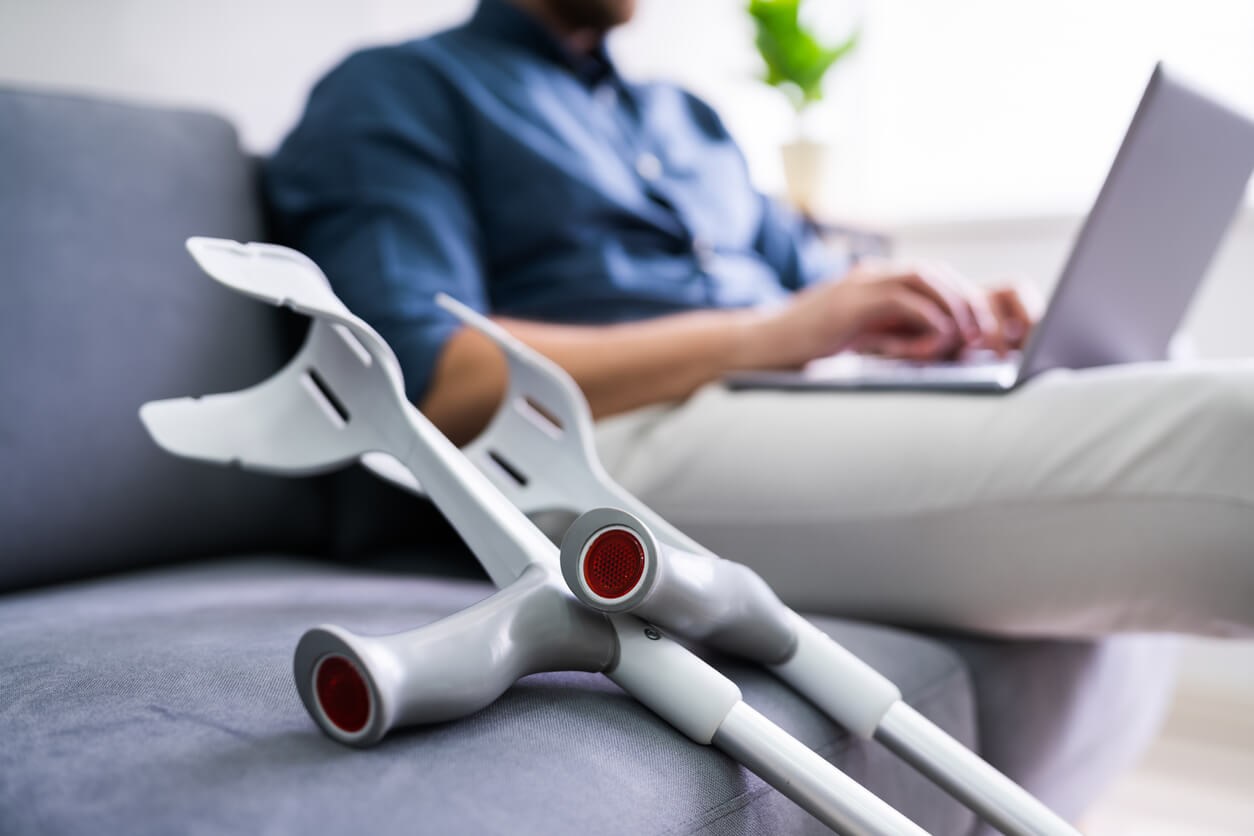
man with knee injury for car accident

Possible Treatment for Car Accident Knee Injuries

Knee injuries are common in a wide variety of motor vehicle accidents. The type of accident, as well as the force of impact, may result in different types of injuries, but all of them can be very painful and require extensive medical intervention in order to properly heal. Ranging from strains and sprains all the way to tears, fractures, and dislocations, immediate and continuous medical treatment for knee injuries should be a priority after an accident to help avoid long-term consequences of the injury as well as to help ensure your injuries are properly documented for personal injury claim purposes

Possible Treatment for Car Accident Knee Injuries

The type and extent of treatment for a knee injury will largely depend on the type and extent of the knee injury that has been sustained. The treatment for a sprain will likely look different than treatment for a dislocation, although there may also be some similarities. Let us review some of the more commonly sustained car accident knee injuries and possible courses of treatment for them.

Muscles in the knee can be sprained, strained, or torn, when the muscles and ligaments are suddenly stretched beyond what they are normally limited to. Most muscle strains and sprains will only require conservative treatment such as rest and icing, as well as compression and elevation of the injured leg. Should a ligament such as the ACL be torn, it may not only be very painful but may also necessitate surgery and extensive recovery, such as physical therapy and follow-up procedures.

The meniscus is also commonly damaged in car accidents. The meniscus is comprised of two pads of cartilage that act as cushions between the thigh and shin bones. When torn, surgery might be needed in order to remove the damaged cartilage, or a simpler procedure involving sewing the cartilage tissue back together may alternatively be merited. In many cases, a knee brace may be required while there is weakness in the injured knee. Fortunately, meniscus tears usually only require a somewhat brief recovery time and there is not likely to be any permanent damage.

With the jarring impact of a motor vehicle crash, specifically those high-speed crashes, the force of impact can cause the bones of the knee joint to be pushed out of their regular positions. This is referred to as a “dislocation.” A dislocation is a complex injury that may also involve torn ligaments as well as cartilage damage. Surgery may be necessary to repair any damage done.

In knee injury cases where surgery is necessary and in other knee injury cases where surgery is not recommended, there will likely be other interventions recommended to address pain and encourage proper recovery. Those with knee injuries will likely be ordered to rest, the injured leg specifically, as well as ice the area and utilize compression which will help increase blood flow to the area and, thus, spur recovery and repair of any damage sustained.

Elevation of the injured leg will also likely be necessary at one point or another in the recovery process, as well as physical therapy. Physical therapy can help build back strength and mobility to the impacted area. Prescription medication and pain management medication are also likely to be recommended in order to reduce inflammation surrounding the injury and address the pain commonly associated with knee injuries.

Philadelphia Personal Injury Attorney

Have you injured your knee in a car accident? Get the medical help you need and get the legal help you need. At Cooper Schall & Levy, we take on the legal burden of your case so that you can focus on recovering your health. Contact us today.

shoulder injury

Shoulder Injured in an Accident? Possible Treatments

Unfortunately, joints like the shoulder can bear the brunt of force in an accident. Whether it be the force of impact in a car accident or trying to catch yourself after you trip and fall from a hazardous property condition, your shoulders can be particularly vulnerable to injury. Shoulder injuries can have a serious impact on your arms’ range of motion and mobility. Furthermore, shoulder injuries can be incredibly painful, require invasive medical treatment, and have lasting consequences for a person’s health and well-being. Here, we will take a look at some of the treatment options you may be presented with should you sustain a shoulder injury

Shoulder Injured in an Accident? Possible Treatments

The type of injury will likely dictate the recommended course of treatment for your shoulder injury as will the extent of the injury. For instance, a torn rotator cuff is not an uncommon shoulder injury to sustain in an accident. The rotator cuff refers to the group of muscles in the shoulder that help the shoulder move and allow for a broad range of motion. A torn rotator cuff may require surgery. In some cases, surgery may be deemed unnecessary. An injury victim with a torn rotator cuff will likely, however, be recommended for extensive physical therapy to help strengthen the area and work towards improving range of motion as the injury heals. Additionally, massage therapy might be recommended in order to ease muscle tension, let the muscles relax, and reduce pain. A doctor may also prescribe pain medication to reduce swelling and pain.

Injury victims may also have sustained a shoulder fracture. The shoulder is comprised of a group of bones that work in concert to allow for shoulder and arm movement. This group of bones includes the humerus, clavicle, and scapula. The humerus is the upper arm bone, the clavicle is the collarbone, and the scapula is the shoulder blade. Surgery for shoulder fractures may involve bone grafting and soft tissue repaid or even, in more severe situations, a total shoulder replacement. Radiographic studies such as x-rays, CT scans, and MRIs will be used to diagnose the extent of a shoulder injury. Surgery may not even be required, but a doctor may recommend things like icing, use of a sling, prescription pain medication, and physical therapy. Once the bones have started to heal, physical therapy, as well as range-of-motion exercises, can help not only repair the area but strengthen it once again.

If you have dislocated your shoulder in an accident, you may also be recommended for surgery. More likely, however, is that you will not need surgery, but will be recommended for use of a sling to help immobilize the shoulder as it heals. You are also likely to be recommended for physical therapy, massage therapy, and other palliative care.

Philadelphia Personal Injury Attorneys

If you have sustained a shoulder injury or other injury type in an accident, do not wait to call the dedicated personal injury team at Cooper Schall & Levy about your options. Waiting on hiring an attorney risks your legal rights and the strength of your case. Contact us today.

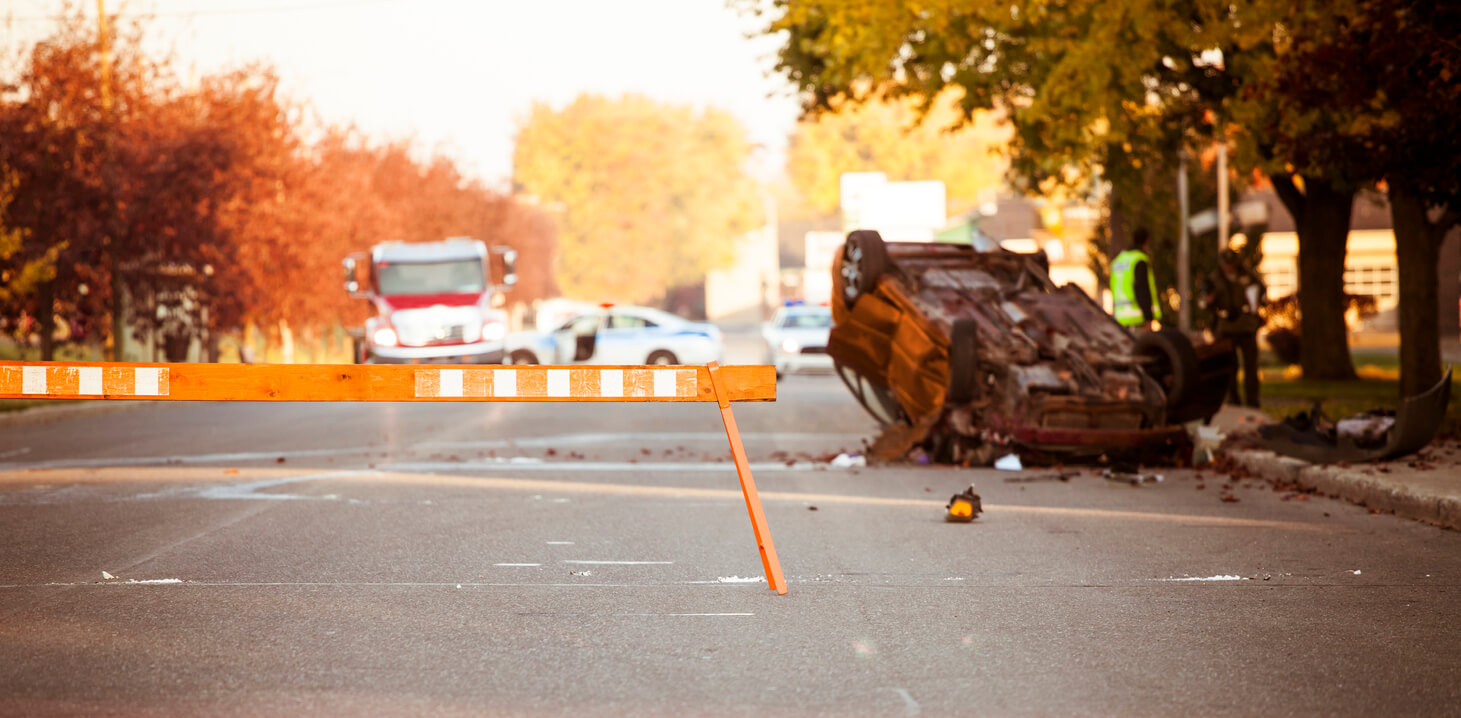
overturned vehicle

Common Causes of Overturned Vehicle Accidents

Have you been involved in an overturned-vehicle accident? Overturned vehicle accidents, or rollover accidents, occur when a vehicle involved has been forced onto its side or rolls over onto its roof. It can be a scary experience, to say the least, and often leads to those involved sustaining really devastating injuries that can have significant consequences to their health for the indefinite future. How does it happen that a vehicle in a crash is overturned? Here, we will discuss some of the more common causes of these types of accidents occurring.

What Causes a Vehicle to Overturn?

Tire problems can be the root cause of many kinds of accidents, overturned vehicle accidents included. Commonly, vehicles with tire problems, ones that experience tire failure, can be more prone to rolling over in a crash. For instance, if there is tire failure or treat separation on a tire, it can be much more difficult for the driver of the vehicle to regain control of the vehicle if it has been lost due to something like being hit by another vehicle or striking an object such as a guardrail or curb. The loss of control can result in the vehicle overturning. In fact, it seems that some types of vehicles are more susceptible to overturning due to tire problems. This includes SUVs and large, 15-passenger vans.

Speeding

Driving at excessive speeds can also greatly increase the chance of a vehicle overturning in an accident. The force that can come with a speeding vehicle can be great. When a vehicle driving at a highly accelerated rate comes into contact with another vehicle, the force of impact can be so intense that the vehicle is forced onto its side or forced to roll all the way over onto its roof.

Driving Under the Influence

In addition to the reckless driving choice of speeding, a driver who chooses to drive under the influence of drugs or alcohol also puts everyone on the road at an increased risk of being involved in an overturned-vehicle accident. Intoxicated drivers have impaired judgment, restricted reaction times, and can make some really poor decisions out there on the road. They may be more susceptible to losing control of their vehicles or violating traffic regulations that put everyone in danger.

Defective Vehicles

Vehicle defects and equipment failures can also be a common cause of overturned vehicles. Did you know that one of the technological advancements in vehicle safety includes stabilizing mechanisms in cars? These stabilizing features are meant to help prevent vehicles from overturning if involved in a crash or if the driver loses control of the vehicle. When this safety equipment fails, the vehicle is more prone to rolling over in a crash.

Philadelphia Personal Injury Attorneys

If you or a loved one has been the victim of an overturned vehicle crash, the dedicated team of personal injury attorneys at Cooper Schall & Levy want you to know that you can count on them to take on the legal fight so that you can focus on your recovery. Contact us today.

injured man researching personal injury negligence

An Overview of Negligence in Personal Injury

Proving negligence is often required in pursuing claims stemming from accidents causing injuries. This includes slip and falls and automobile accidents. What, however, is negligence? At its essence, negligence means that someone did not act the way they should have and someone suffered harm as a result. Here, we will go into more details regarding negligence and its legal implications

What is negligence?

In most, if not the majority, of personal injury cases, you must prove a person was negligent before you can hold him or her legally responsible for the harm you incurred as a result of their negligence. To successfully prove negligence, there are four elements to prove, including duty, breach, causation, and damages.

Duty refers to the legal duty a defendant owed to a plaintiff, the injured party seeking compensation for harm suffered. There are certain situations where people owe each other a duty of care. For instance, when operating a motor vehicle on public roads, a person is expected to act with a certain level of care, operate the vehicle safely, and comply with the rules of the road. Other times, it is a relationship between two people that creates the duty. For instance, a doctor owes a patient a duty of care to provide him or her with reasonable medical care.

Breach refers to the defendant’s action or inaction which represented a violation of the legal duty owed to the plaintiff. Courts will use the “reasonably prudent person” standard in most cases to see if a defendant’s conduct breached the duty owed. Essentially, it is a comparison to how the average person would act if put in a certain situation.

The causation element of negligence means that a plaintiff will need to show that the actions or inaction of the defendant caused his or her damages. It is not enough for a person to simply be acting carelessly or recklessly. The negligent action must have been the cause of the plaintiff’s harm. The plaintiff will only be able to recover for the harm that was caused by the negligent action or inaction. With causation, it must also have been reasonably foreseeable that the negligence may cause an injury. Sometimes, through the most random acts of nature, an action may lead to an injury that no one could have predicted. In this type of case, a defendant may not be held liable for the resulting injury

Lastly, the negligence must have directly resulted in the plaintiff suffering harm, or damages. Specifically, the plaintiff must have suffered some harm which would allow a court to compensate him or her for losses sustained due to the negligence. Usually, this compensation comes in the form of monetary compensation for things such as medical expenses, property damages, lost wages, and more.

Philadelphia Personal Injury Attorneys

Have you been injured by the negligence of another? If so, the trusted personal injury attorneys at Cooper Schall & Levy are here to pursue your legal right to a full and fair monetary recovery. Contact us today.

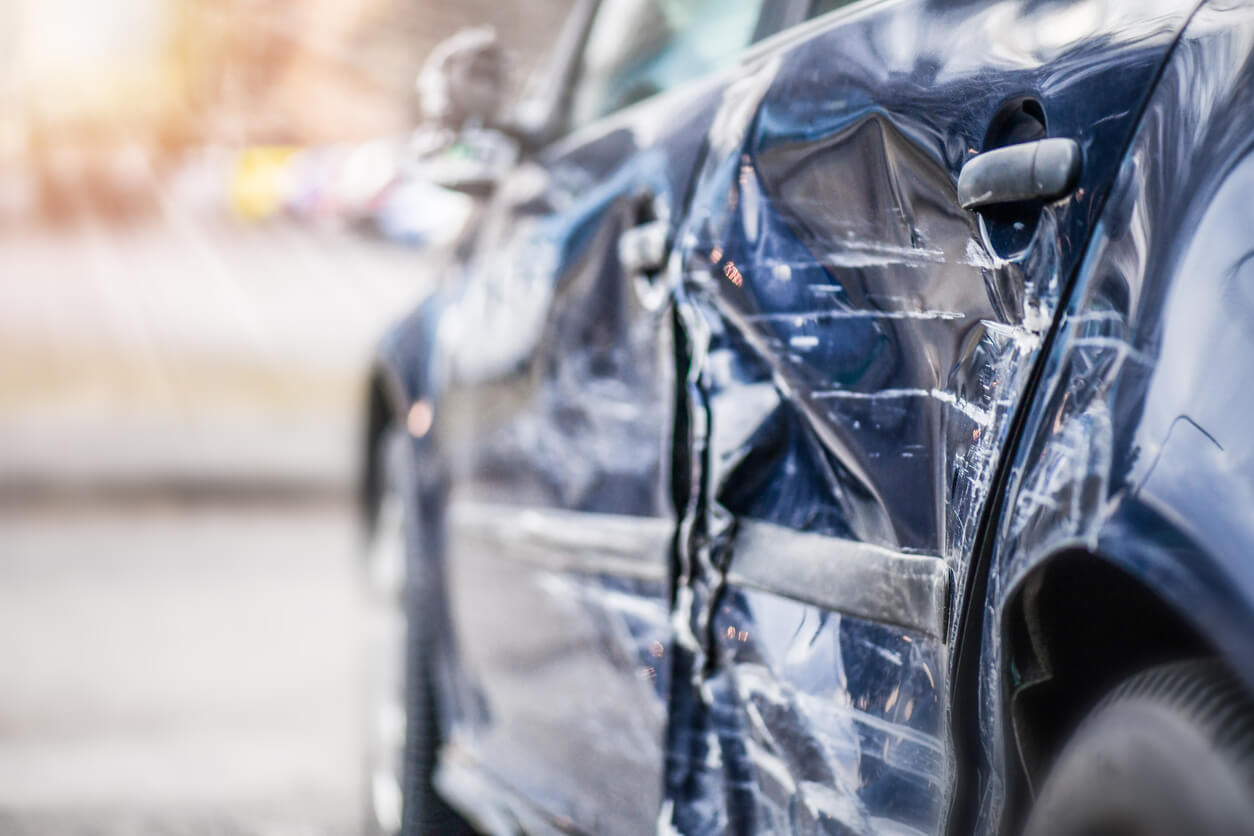
blue car in accident

How Does UM/UIM Coverage Work?

When signing up for automobile insurance, it can be easy to be overwhelmed and confused by your options. The tangle of coverage choices can be difficult to unravel. Understanding your car insurance options and getting the right coverage you need, however, is incredibly important. That is why we are going to focus our discussion here on one of your coverage options, Uninsured/Underinsured (UM/UIM coverage), and how it works

Overview of UM/UIM Coverage

Let us begin our coverage conversation with the automobile insurance requirements that Pennsylvania drivers are subject to. For starters, all Pennsylvania drivers must carry bodily injury liability coverage in the amounts of $15,000 per person and $30,000 per accident. Should you injure someone in a car accident you cause, this coverage will go towards paying for the person’s medical expenses and other related damages. Additionally, you are required to carry $5,000 in property damage liability coverage which will pay for someone else’s property damage in an accident you are at fault for causing. You are also required to carry first-party benefits of $5,000 which will go towards paying for your medical bills regardless of who is at fault in causing the accident. You can always opt for higher limits as well.

When signing up for automobile insurance, you are required to be offered minimum Uninsured/Underinsured motorist coverage of $15,000 per person and $30,000 per accident. In Pennsylvania, UM/UIM coverage is optional, but you must explicitly request to reject this coverage option. Even though UM/UIM coverage is optional, it should still be seriously considered. When considering whether or not to carry UM/UIM coverage, it is helpful to understand how it works.

UM coverage comes into play should you be hit by an uninsured motorist or should you be injured in an accident caused by a hit and run driver that cannot be located. The most recently released data from the Insurance Information Institute states that approximately 13 percent of motorists in Pennsylvania are uninsured. This means your chances of being injured in an accident caused by an uninsured driver are pretty solid. Should this happen, you can make a claim with your UM carrier seeking compensation for losses you sustained in the accident.

UIM coverage comes into play when you are injured in an accident caused by a person who does not carry enough insurance to adequately compensate you for your damages. In this case, you must first exhaust the insurance limits of the at-fault party. Once you have done so, you can make a claim with your UIM coverage carrier for the damages that remain unpaid.

Philadelphia Personal Injury Attorneys

The personal injury attorneys at Cooper Schall & Levy are committed to protecting and fighting for the best interests of you and your loved ones. If you have been injured in an automobile accident, we will explore every possible avenue of recovery to help ensure that you are properly compensated for your losses. Contact us today.

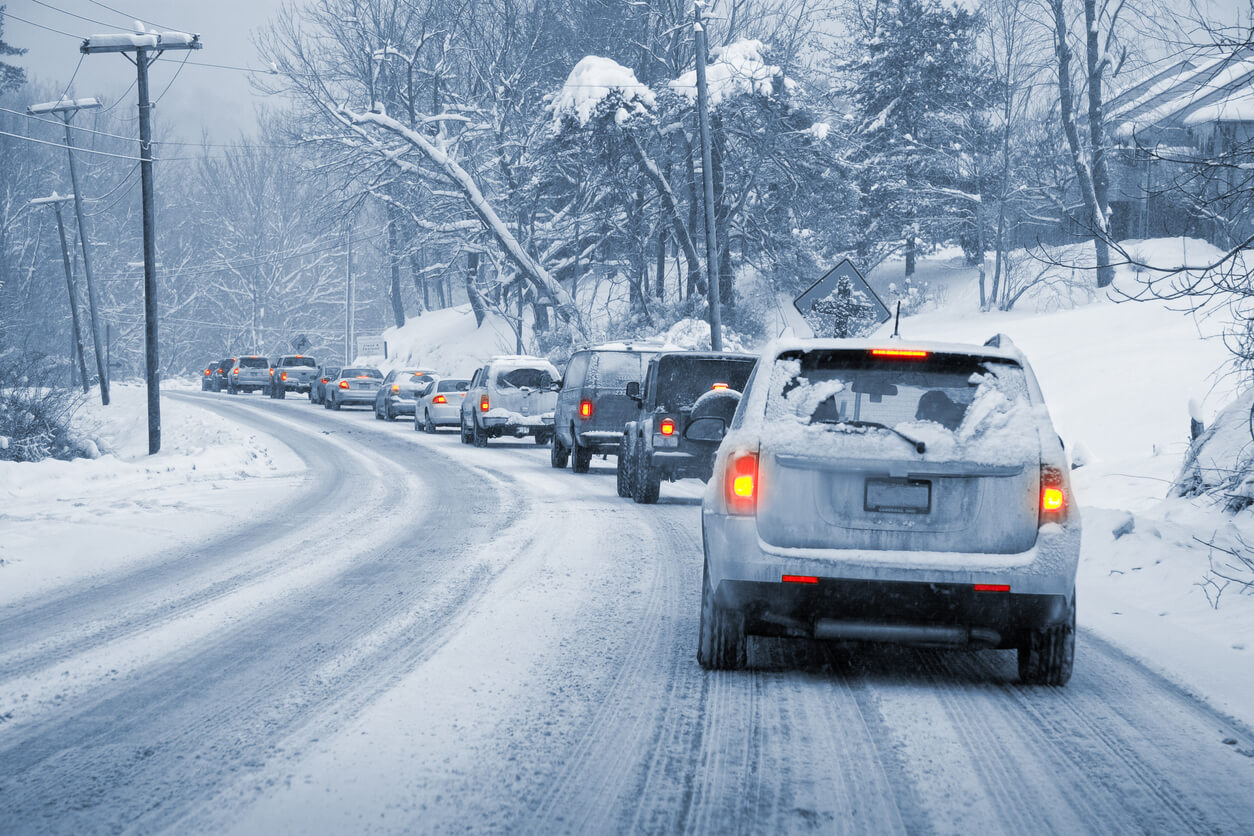
icy/snowy roadway

Winter Roadway Dangers

Here in Philadelphia, we are no strangers to harsh winter weather conditions. As the last leaves fall from the trees, we brace ourselves for a long, cold winter ahead. While many of us have spent our lives learning to drive in adverse winter weather conditions, it can be far too easy to become complacent about this. Let us take a moment to refresh and learn about some ways to deal with winter roadway dangers so we can help keep each other safer on the roads this winter.

Common Road Hazards During the Winter

Winters in Pennsylvania can mean snow, ice, sleet, and freezing temperatures. Blizzards, heavy snow, and other weather conditions can seriously reduce visibility on the roads, increasing the risk of an accident. Furthermore, snow piled up on the roadways can make it difficult for drivers to see things like traffic signs, as well as pedestrians and other vehicles

Slippery roadways also are a significant winter roadway danger. Iced over roads, particularly black ice that is not as visible to drivers, can present as a particularly dangerous winter roadway condition. The icy roads significantly reduce the car’s ability to maintain traction, increasing the likelihood of the car spinning out of control. Icy roadways also reduce a car’s ability to brake quickly to avoid things like rear-ending or hitting another vehicle.

The freezing temperatures can also be dangerous for drivers, particularly drivers who may be experiencing car troubles and must wait on the side of the road for assistance. Without proper preparation, you can find yourself exposed to these freezing temperatures without the necessary gear to help you cope with them and this can take a significant toll on your body.

Car maintenance issues also tend to become exponentially more dangerous in the winter months. Worn-out tires mean poor traction on top of potentially slick or icy roadways which can be a combination for disaster. Additionally, things like broken headlights, windshield wipers in disrepair, or broken defroster fans can have a significant impact on your ability to safely navigate through winter weather conditions.

To avoid or reduce the risk associated with these winter roadway dangers, you should be prepared to eliminate all unnecessary travel depending on the weather forecast. If you must drive during poor winter weather conditions, be sure to keep a winter emergency travel kit in your vehicle. Keep your gas tank at least half full at all times and be sure to reduce your speed as well as increasing your following distance

Before you head out on winter travels near or far, be sure to tell someone else where you are going as well as your estimated arrival time. This can be helpful should you need emergency assistance as someone will know generally where to look for you. Should you become stranded, remain with your vehicle until assistance arrives. Make sure your tailpipe is clear, crack your windows and run the engine about every hour.

Philadelphia Personal Injury Attorneys

At Cooper Schall & Levy we want you and your loved ones to stay safe this winter and all year long. Be safe out there, especially as icy weather conditions are soon on their way. If you are injured out there on our winter roads, we are here to help. Contact us today.

man with whiplash

What Is Whiplash?

Have you heard of whiplash? Many may have but are unfamiliar with what it is exactly. People usually know that it involves some kind of neck pain and that it is commonly associated with auto accidents. There is, however, much more to whiplash. Here, we go into further detail regarding the causes of whiplash, its symptoms, and your treatment options.

Understanding Whiplash

Whiplash is named as such because the injury occurs when the head moves suddenly backward and forward, essentially cracking it like a whip. Because whiplash is caused in this way, it may come as no surprise that it is commonly sustained in rear-end car collisions. It is also a common sports injury. When the head and neck are forced into such a rapid movement, the muscles and ligaments, which are soft tissues, in your neck are extended beyond what the usual range of motion is for them. The stretching and tearing of these soft tissues is what is at the heart of whiplash.

One of the dangerous things about whiplash is that the full symptoms of this injury may not present themselves until a few days after you are in an accident. This is why it can be so important for you to seek immediate medical attention after an accident even if you feel pretty normal right after. When you seek medical treatment right away and get the follow-up evaluations and care you need, it is more likely to have your whiplash injury, as well as other injuries, identified and the proper treatment plan prescribed which will help you have a faster more effective recovery time.

Common whiplash symptoms include:

  • Neck pain
  • Neck stiffness
  • Headaches
  • Blurred vision
  • Dizziness
  • Fatigue

Less common symptoms of whiplash include things such as difficulty sleeping, irritability, and ringing in the ears. To have your whiplash injury properly diagnosed, you need to be in clear communication with your doctors about the symptoms you are experiencing. Because whiplash is a soft tissue injury, it can be difficult to diagnose. To properly diagnose whiplash, your doctor will rely heavily on your description of the symptoms you are experiencing. You describe your symptoms to your doctor, radiographic studies and other tests, such as x-rays, will be ordered to see if your symptoms may be due to some other type of injury. CT scans and MRIs will show if there is any damage or inflammation present in your soft tissues, spinal cord, or surrounding nerves.

For treatment options, there may be a range available to you. You may be prescribed pain medication for more serious cases or over-the-counter pain medication. Hot and cold therapy, as well as chiropractic care, massage, and acupuncture, may also be effective in addressing your symptoms. Proper posture and stretching can also have a beneficial impact on the injury.

Philadelphia Personal Injury Attorneys

If you have sustained a whiplash injury in a car accident, it is crucial for you to get the medical care you need. This is not just because it can be essential to recovering from your injuries, but it can also help preserve the value of your personal injury claim. For more assistance in enforcing your right to receive full and fair compensation for your auto accident injuries, the dedicated personal injury team at Cooper Schall & Levy is here for you. Contact us today.

parking lot

Parking Lot Accidents

It might not seem like it, but parking lots can be dangerous places. The often small space of a parking lot can be quickly filled with any number of hazards such as pedestrians (some of whom are very distracted and not paying attention), other vehicles (some of whom are very distracted and not paying attention), poorly marked travel lanes and obstructions like shopping carts, curbs, etc. With so much going on in such a small area, accidents can happen all too easily. While parking lot accidents often occur at low speed, they can still lead to significant property damages and injury. Pedestrians, in particular, are at risk of sustaining devastating injuries in parking lot accidents.

Parking Lot Accidents

There are several common types of parking lot accidents and, most of the time, liability is pretty easy to establish. Mainly, to establish liability in parking lot accidents, you look to whether a vehicle was stopped or moving and who had the right-of-way. If only one car involved in the accident was moving, it will usually be held responsible for the accident. If both cars were moving at the time of the accident, the driver who did not respect the right of way of the other vehicle will usually be held liable for the accident. Other factors, however, will come into play in establishing liability, including whether a vehicle was speeding or violating traffic signs or signals.

One common type of parking lot accident is when two drivers back out at the same time and, essentially, rear-end each other. Drivers have a responsibility to check behind them before backing out. Because both drivers involved had this responsibility, it is likely that, without other circumstances present, both will share in the liability of causing the accident. Drivers will also sometimes back out of spaces into a pedestrian behind them. This can be a particularly devastating situation as even a car backing out slowly can cause serious injury to a pedestrian. In this scenario, it is likely that the driver of the vehicle backing out will be found to be at fault for the accident.

It is also common that a driver will pull out of a parking space into traffic or back out of a parking space into an oncoming vehicle. In both of these cases, the oncoming driver has the right of way. This means that the driver backing out of the parking spot is most likely going to be found at fault for causing the accident.

To avoid being involved in a parking lot accident, always travel at a reduced speed in parking lots. Check your side mirrors to help ensure that you have minimized your blind spots. Pedestrians, in particular, can be difficult to see! Make use of your vehicle’s safety features, such as motion sensors and backup cameras when you are leaving a parking space. Be clear with other drivers about your intentions by properly signaling. Finally, comply with parking lot signs and always check more than once for pedestrians, other vehicles, and other things before you back up.

Philadelphia Personal Injury Attorneys

Have you been injured in a parking lot accident? The trusted personal injury attorneys at Cooper Schall & Levy are here for you. Contact us today.