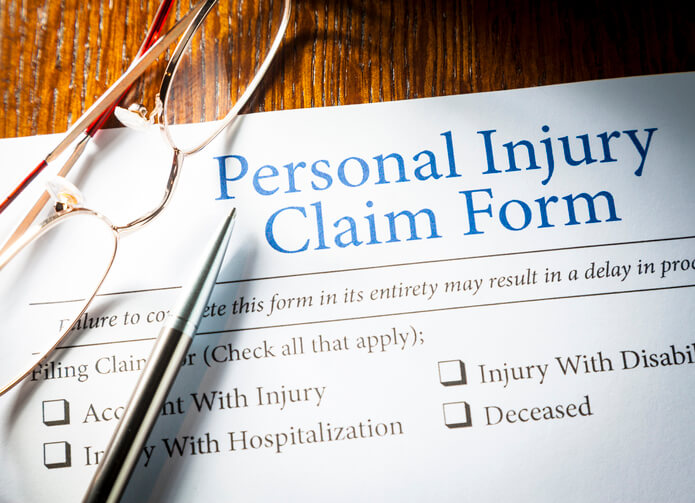

Personal injury claim form

What’s a Good Settlement Offer for my Claim?

Being eager to settle your personal injury claim is only natural. After all, it can feel like a long process. After the accident, you will have doctor’s appointments, follow-up appointments, and much more. You are likely ready to get things wrapped up and move on with your life. Insurance companies, however, are aware that most claimants feel this way and are thus quick to offer lower settlement offers in the hopes that you will jump at the chance to resolve your claim and move on. So, what would an actual good settlement offer for your claim look like? We will explore this question in more detail here.

What’s a Good Settlement Offer for my Claim?

A good settlement offer for your claim will depend on a variety of factors. No personal injury claim is going to look exactly the same and a settlement offer is completely dependent on the details of the claim itself. First, it can be instructive to go over what type of damages are included in a personal injury claim settlement offer. Damages in a personal injury claim will include economic and non-economic damages. Economic damages include those more easily quantifiable damages such as medical bills, cost of future medical care, lost wages, and loss of earning capacity. Non-economic damages are those damages that are much more difficult to put a number on. Pain and suffering damages, for instance, are classified as non-economic damages.

So, a good settlement offer will take into consideration the amount of medical bills and expenses you have incurred as a result of the accident injuries. The amount of medical bills you have totaled up over the course of your treatment will largely depend on the nature and extent of your injuries along with the level of treatment you have received for those injuries. Your injuries and the treatment needed to address your injuries may have also resulted in you missing work and incurring lost wages as a result. The amount of wages you missed out on due to your injuries should be included in a settlement offer. Furthermore, if your injuries have impacted your future earning potential, such as by placing limits on your ability to advance in your job, then the settlement offer should also account for your loss of earning capacity.

Your attorney will likely set forth solid estimations of these damages, among other things, in the demand letter sent to the insurance claims adjuster. A demand letter lays forth the nature of the accident, the resulting injuries, the damages incurred as a result, and a proposed settlement amount. Upon receipt of the demand letter, the insurance company will do one of three things. The proposed settlement amount may be accepted, the claim as a whole may be completely denied, or, in the most common situation, the insurance company will counter with their own settlement offer and negotiations will kick-off.

Philadelphia Personal Injury Attorneys

If you have been injured in an accident, do not hesitate to reach out to the trusted team of personal injury attorneys at Cooper Schall & Levy. We are here to help make sure you are properly compensated for your losses. Contact us today.

Injured woman on the phone and computer

The Impact of Treatment Gaps on Your Personal Injury Claim

Insurance companies will not simply payout on a claim you make after an accident on your word alone. Quite the opposite. Insurance companies will require thorough documentation regarding the accident, your injuries, and your expenses incurred as a result of the accident. A huge part of this supporting documentation will include your medical records showing your course of treatment for your accident injuries. You see, getting consistent treatment for your injuries following an accident is not only best for your injuries to properly heal, but it is also essential for preserving the value of your personal injury claim. Failure to get consistent medical treatment can be a great risk to your health, as well as the strength of your personal injury claim.

The Impact of Treatment Gaps on Your Personal Injury Claim

A treatment gap, or a lapse in you receiving medical treatment for your accident injuries, can occur in two instances. First, a treatment gap may refer to the delay it took in you to seek medical evaluation and care following an accident. Second, a treatment gap may refer to a lapse of inconsistent treatment for your accident injuries once you had already started treatment. In either instance, a treatment gap can threaten your personal injury claim.

You see, medical records really are essential to the strength of an injury claim. In the eyes of the insurance company, if you are hurt in an accident, then you seek immediate medical evaluation. If you are hurt in an accident, then you receive consistent, uninterrupted treatment for your injuries. Any gap will likely be used by an insurance adjuster to justify devaluing your claim. Adjusters, after all, will be looking for reasons to pay you less than you should actually be owed or to not pay you at all.

In the real world, however, we know that there are plenty of legitimate reasons a person may have a gap in medical treatment following an accident, even if they are suffering from accident injuries. Life goes on after an accident and there can be a bombardment of scheduling conflicts that get in the way of doctor appointments. You may also get sick and be unable to make your appointments. There are a number of perfectly acceptable reasons for a treatment gap, but you should still try your best to avoid them as best as possible.

To minimize the impact of treatment gaps, and strengthen your claim even in the absence of treatment gaps, you should keep a journal following the accident. In your journal, keep track of your medical appointments. Report on the pain you are experiencing. Document your symptoms and how they evolve over the course of treatment and following the accident.

It is worth stating again, however, that it is extremely important for your health and your personal injury claim to avoid treatment gaps whenever possible. The health-related fallout from accident injuries can be severe and continuous treatment will help minimize this impact. Comply with doctor-recommended treatment and follow-up treatment orders. Your health and well-being are too important not to.

Philadelphia Personal Injury Attorneys

At Cooper Schall & Levy, our team is dedicated to fighting for the injured. Hurt in an accident? Contact us today.

Two drivers surveying a car accident

Preparing to be Deposed in Your Personal Injury Case

A personal injury claim is most often resolved through settlement negotiations with the insurance company of the at-fault party. The insurance company is provided with a demand letter outlining the claimant’s damages, such as the injuries, medical bills, lost wages, and other harm incurred due to the accident, and is provided with an offer amount that would properly compensate the victim. Settlement negotiations often ensue after the insurance company declines the initial settlement offer included in the demand letter and, usually, a mutually acceptable settlement amount is reached afterwards. Sometimes, however, no reasonable settlement offer can be reached with an insurance company. The company will refuse to pay out on an amount the claimant supports as fair with evidence such as medical records and bills. When this happens, a lawsuit may be filed and trial preparation will proceed as discovery begins.

The discovery process is the fact-finding period before trial. Both sides will have a number of different opportunities to gather as much information about the case as possible. One prominent part of discovery includes depositions. As the plaintiff, the injured party in the lawsuit, you will be deposed by opposing counsel. This can be an intimidating prospect, despite assurances that your attorney will be by your side throughout the deposition. To help relieve any lingering anxieties and help ensure that your deposition is as smooth and productive as possible, here are some tips on how to prepare for it.

Preparing to be Deposed in Your Personal Injury Case

At your deposition, you will likely be questioned extensively on the accident. There will be a line of questioning relating to the actual events and circumstances surrounding the accident. There will be a line of questioning relating to your injuries and medical treatment relating to those injuries. There will be seemingly endless questions about how the accident and resulting injuries have impacted your life. You should be prepared to answer all of these questions and do so in a way that is concise and direct. Only answer the question posed to you and avoid wandering off onto tangential topics.

Before the deposition, get yourself in the right headspace. How you present yourself at the deposition can actually have a big impact on the outcome of the case. This is in no small part due to the fact that opposing counsel will be sizing you up for how effective you would be as a witness at trial. Those plaintiffs that are polite and cooperative tend to be more reliable witnesses and more sympathetic. This, in turn, means that they are likely to be more successful at trial and be awarded larger damage awards. Counsel for insurance companies knows this. In fact, you may be offered a settlement offer in the wake of a successful deposition that negates the need to proceed with the trial.

In line with having the right attitude for the deposition, be prepared to dress for the occasion. Remember, how you present yourself at the deposition is important and your dress contributes to this. Wear neat and even professional attire. Business casual attire at a minimum is a good rule of thumb.

Philadelphia Personal Injury Attorneys

The dedicated personal injury team at Cooper Schall & Levy will prepare you for the road ahead. We will be by your side every step of the way as we fight for your right to be properly compensated for the harm you have suffered. Contact us today.


Disabled man calculating with the money

How Do You Show Loss of Income?

When you are injured in an accident, the harm you suffer can be severe. There are far-reaching impacts of being injured in an accident that you might not consider at first or before you have lived this situation for yourself. Harm resulting from an accident, of course, often focuses on the physical, and even mental, injuries, a person sustained. With these injuries, however, can come significant financial implications for the injury victim and his or her family. Consider the medical bills that pile up so a victim can get needed treatment. There are also, however, likely to be other financial impacts caused due to accident injuries. It is common, for instance, for an injury victim to miss work following an accident. Loss of income, or lost wages, can and should be included in a claim for damages stemming from an accident.

How Do You Show Loss of Income?

Loss of income is included under the umbrella category of economic, compensatory damages. Compensatory damages are those damages intended to set the injury victim whole after an accident. They aim to repay the losses the victim incurred. Economic damages are those damages that are fairly easy to calculate as they can be based on numbers found in things such as pay stubs, etc.

With the loss of income, for instance, a personal injury claimant can support such a claim in damages by using evidence in the form of timesheets and pay stubs, as well as W-2 and other tax forms showing how much he or she receives in wages over a period of time and how much time was missed due to the accident. For a person who is self-employed, loss of income can be supported through proof of missed opportunities that passed by in the wake of an accident.

It should be noted that missed days of work do not have to be consecutive to be compensable in your personal injury claim. While you may miss a series of consecutive working days immediately following an accident in order to get immediate medical treatment and recuperate, you are likely to go on to miss even more days of work over the course of your treatment and recovery. There will be follow-up doctor appointments, appointments for lab tests, and procedures to address your injuries followed by more recovery time that are likely to be in your future. This can all result in more missed work. 

The loss of wages resulting from accident injuries can be keenly felt during this time. It is common for accident victims to be thrown into financial distress after an accident. This is usually the result of medical expenses and missed work. Know that all of these expenses are compensable. In fact, accident victims who have suffered an injury in an accident caused by the negligence of someone else are legally entitled to compensation for the harm suffered as a result of the accident.

Philadelphia Personal Injury Attorneys

The dedicated team at Cooper Schall & Levy is here to fight for you. We know what clients are up against and provide zealous representation to pursue their best interests and their right to full and fair monetary compensation. Contact us today.


injury victim filling out personal injury claim

Can You Sue for Pain and Suffering in Pennsylvania?

When you suffer injury in an accident caused by the negligence of someone else, you can pursue compensation for the harm you have incurred through a personal injury claim. Your damages refer to those compensable harms you suffered in the accident. Compensatory damages are divided into two main categories: economic and non-economic. Economic damages refer to those more easily quantifiable impacts of an accident. These specific economic harms include medical expenses, the cost of future medical care, lost wages, and much more. Non-economic damages are those losses that are just as real, but are intangible and more difficult to quantify. In Pennsylvania, non-economic loss include pain and suffering. Can you sue for pain and suffering in Pennsylvania?

Pain and Suffering in Pennsylvania

When you are injured in an accident, the harm you experience can run much deeper than your medical bills. There is the pain of going through an accident, the pain of your injuries, the pain and stress that can be involved in treatment of your injuries, and the impacts your injuries can have on your life. Perhaps you have had to give up certain things that used to bring you so much joy. Maybe some of your relationships have suffered as a result of your accident injuries. These are things that are included in pain and suffering damages. Other damages that fall under the pain and suffering umbrella include:

  • Pain in the body
  • Emotional trauma
  • Reduction in life expectancy
  • Loss of consortium
  • Loss of enjoyment of life
  • Humiliation

Just as with economic damages, for pain and suffering and other non-economic damages to be awarded the injury victim must be able to show that the pain and suffering was a direct result of the accident.

While you may be entitled to pain and suffering damages in a Pennsylvania personal injury action, you should be aware that these damages are notoriously difficult to calculate. The subjective nature of pain and suffering alone can be a seemingly insurmountable complication. Everyone experiences pain differently, right? The same injury will likely have different impacts depending on the person who sustains it, afterall. This is why evidence of your injuries and the effects your injuries have had on you and your life are critical to building your case for pain and suffering damages. Medical testimony will help as will testimony from friends, family, and loved ones about how your injuries have impacted your life and your relationships. Other factors such as your age, injuries, and the type of treatment you received will also be taken into account.

Though you may be able to pursue pain and suffering damages in Pennsylvania, you should be aware of potential limitations, such as recovery in your case. For a policyholder who has elected to carry “limited tort” coverage, he or she will need to show serious injury under Pennsylvania law in order to recover pain and suffering damages. Furthermore, while Pennsylvania may not limit the amount of compensatory damages available in a personal injury case against a private party, there are limits in place when the claim is against a government body. For instance, a claim against the Commonwealth is limited to a recovery of $250,000.

Philadelphia Personal Injury Attorneys

For all that you have suffered as a result of an accident, Cooper, Schall & Levy is here to get you the compensation you deserve. Contact us today.

attorney meeting with personal injury client

Why Do I Need a Personal Injury Attorney?

The typical insurance company advertisement, which demonstrates care, comfort and support after a tragic accident, is misleading and can make the reality of dealing with insurance companies after you have been injured in an accident jarring, frustrating, and disappointing. After years of paying your premiums, people can often be incredulous at the response they get from their insurance companies after they try to access the benefits they have so diligently paid for. Dealing with the insurance company for the party responsible for causing an accident can be even more frustrating. These large business institutions will work tirelessly to undermine your claim and find a way out of compensating you properly. That is why you should have a personal injury attorney who will fight back.

Why Do I Need a Personal Injury Attorney?

As insurance companies are, at their cores, businesses driven by profit, it may be disappointing, but it might not be as shocking to find that they will look for any way to avoid paying out in whole or part on a claim filed after an accident resulting in injuries. It is a harsh reality that many insurance companies will not take unrepresented claimants seriously. In fact, insurance companies will try to rush a person into taking some low-ball settlement offer before legal counsel can be secured. They do this because they know an attorney can be best equipped to approximate what damages you are entitled to as well as working towards enforcing your right to said damages.

A personal injury attorney can work to estimate what a fair settlement amount may look like. This will be based on things such as your injuries, medical bills, the approximate future cost of medical care, and much more. If an insurance company makes a settlement offer, an attorney can counsel you on whether it is a strong offer or not.

Furthermore, an attorney can present the strongest facts of your case and advocate on your behalf, whether dealing with the insurance company directly or one of the attorneys they have hired. Is the insurance company basing denial of your claim on things like pre-existing medical conditions or questions as to liability? Your attorney can help gather the evidence needed to dispel such uncertainties and present your case in the strongest light possible.

Do not underestimate the fact that having an attorney by your side demonstrates to the insurance company that you are willing to go the distance with your claim. You are making a statement that you know your claim has value and you are willing to pursue it all the way to trial, if necessary. The threat of litigation looming over a claim can be powerfully persuasive to keep an insurance company on the straight and narrow and push them to make more solid settlement offers. A trial can be time-consuming and expensive to these companies, so they have more motivation to do the right thing and pay out your claim.

Philadelphia Personal Injury Attorneys

At Cooper Schall & Levy, we are here for you. We are here to hold the big insurance companies accountable. We are here to get you the monetary compensation you deserve for the harm you have suffered. Do not go it alone. Contact us today.

man signing a waiver

Can You Overcome a Waiver?

Have you signed up at a gym and signed a waiver along with your new member paperwork? Has your kid gone on a field trip or signed up for a sports activity and a waiver was part of the multitude of forms you needed to complete and sign? These waivers include exculpatory clauses meant to protect a business or entity from being required to pay damages should the person subject to the waiver be injured or suffer harm while on the premises or participating in the specified activity. If you signed one of these waivers and were subsequently injured or your child was injured after signing, you may be considering your options and whether you have the option of overcoming the waiver to pursue monetary damages.

Can You Overcome a Waiver?

In certain situations, it is possible to overcome a waiver. Pennsylvania has parameters that waivers must meet in order to be valid and enforceable. Should a waiver fail to comply with such parameters, it may be rendered useless, and an injured party can proceed in seeking damages against the business or entity associated with the harm suffered

To be valid, a waiver must fall in line with public policy and must relate only to the private dealings of the parties involved in the waiver. Furthermore, the validity of a waiver is contingent on it not being a contract of adhesion. This means that the party agreeing to the waiver must not be under any compulsion to participate in the activity associated with the waiver. It cannot, therefore, relate to essential services. Waivers must only govern voluntary recreational activity.

To be enforceable, there are other criteria that must be met. For instance, the language of the waiver must be clear and unambiguous. Generalities are disfavored in waivers and more specific language is much more likely to be enforceable. The law tends to be suspicious at best of exculpatory language and any ambiguous terms of the waiver will likely be construed in favor of the party seeking damages against the party seeking to be shielded by the waiver. Courts will be wary of overbroad language in a waiver. A waiver that states you waive all liability by signing it will not likely stand up in court as enforceable. The party signing the waiver must be informed precisely as to what rights he or she is giving up.

Should there be any question that the waiver you signed was too general, runs afoul of public policy, is vague or unclear, or asks you to waive liability generally, including for reckless acts, it is likely that you will be able to overcome the waiver. In overcoming the waiver, you will be able to pursue damages against a negligent entity that caused you injury.

Philadelphia Personal Injury Attorneys

Have you or your child been injured while participating in a recreational activity? Did you sign a waiver and are unsure whether you have a claim? Talk to the knowledgeable team at Cooper Schall & Levy about your options. Contact us today.

expert witness swearing in

What Do Expert Witnesses Do In A Personal Injury Case?

There are many reasons why a personal injury claim may go to trial. Insurance companies will go to great lengths to avoid paying out on a claim. If there is any gray area regarding something such as who caused the accident or whether the claimed injuries were preexisting or a result of the accident, the insurance company will look to exploit it as best as possible. While the majority of personal injury claims settle before trial, some personal injury claims are not settled before trial. Should your claim go to a trial, you will get a glimpse of all that goes into presenting a case to a judge or jury. Your attorney will be strategizing on the most effective way to detail your case and explain its details to a judge or jury. Part of an effective trial strategy will often involve retaining expert witnesses to testify at trial. Here, we will discuss more details on the role of an expert witness at a personal injury trial.

What Do Expert Witnesses Do In A Personal Injury Case?

To start, it is important to understand what exactly an expert witness is and how an expert witness differs from a lay witness. A lay witness is one that is qualified to testify at trial because he or she has personal information relating to the facts of the case. For instance, a person who was at the accident scene and witnessed the accident may be a lay witness at trial as might a friend or family member be a lay witness to testify as to how the accident and your resulting injuries have impacted your life.

An expert witness, on the other hand, is not testifying because he or she has personal knowledge relating to the relevant issues of the case but because he or she has expertise in an area that can illuminate and unravel complex and contested issues of the case. This expertise is usually rooted in something such as education or experience working in a particular field. For instance, an economist might appear as an expert witness at trial to detail the financial toll an accident has taken on a person. A vocational expert witness may testify as to how the injuries prevent the accident injury victim from working or from working in the same job as he or she had prior to the accident. An accident reconstructionist can provide illuminating testimony in such cases where there were no accident witnesses and it is essentially one driver’s word against another driver’s word. The accident reconstructionist can explain, based on things like the physical evidence found at the scene and the nature of the damage to the vehicles involved, how the accident is likely to have occurred and who is most likely the party responsible for causing the accident.

Because the testimony given by an expert witness is based on professional expertise, their opinions are seen as more objective than that of other witnesses. Due to the objectivity, the judge or jury tends to give a significant amount of weight to the testimony of an expert witness. Having an expert witness present at trial can not only help clarify some of the more complex issues or hotly contested issues of the case, but it can help increase damage awards.

Philadelphia Personal Injury Attorneys

Not all personal injury attorneys are willing to take a claim all the way to trial. At Cooper Schall & Levy we are in it for the long haul. We don’t shy away from a fight with the big insurance companies and we are here to see that you get the monetary compensation you are entitled to. Contact us today.

injured athlete

How to Help Athletes Stay Injury Free

Staying active fits prominently into leading a healthy lifestyle. Engaging in sports and other physical activity can have a wealth of benefits for your body. Even athletes, however, must take care and exercise caution in order to reap the maximum health benefits and stay injury free. Challenging your body is one thing, but risking injury and overtaxing it, especially without taking certain precautions, can have some tough and lasting consequences. Here, we will take a look at some tips to help athletes stay injury free.

How to Help Athletes Stay Injury Free

In sports and other athletic endeavors, using the proper attire and safety equipment should be a priority. For instance, soccer players should wear cleats to have more traction on the field and shin guards to protect the vulnerable shin areas to the cleat kicks of other players. Even those looking to work out, but not in a necessarily team sport setting, such as bicyclists, should wear the proper entire and safety gear. Bright, reflective clothing, for instance, could be lifesaving as it will help the rider be more visible to vehicles on and near the roadway.

Compliance with the roles of the game and other associated rules can also be a critical part of an athlete staying safe and injury free. For instance, some soccer leagues do not allow slide tackling the ball. It is seen as an unnecessarily dangerous move that can cause serious injury to other players. Furthermore, there may be rules related to an activity that should also be observed to help keep everyone safe. Bicyclists, for instance, should comply with the rules of the road. Bicycles, while so different from cars and other motor vehicles, are still expected to observe traffic regulations. This is, of course, to keep the flow of traffic steady and somewhat predictable as everyone follows the same set of rules and expectations for being on the road.

A big part of staying injury free for athletes also involves recognizing the needs and function of their own bodies. For instance, stretching before and after physical activity in a designated warm-up and cool-down time can be a crucial part of avoiding things like excessive strain on the body and cramping. It can also help maximize the effectiveness and health benefits of the activity. Warm-up time helps blood begin to move to the muscles in the body and prepare it for more rigorous activity. Cooling down with a stretch can help release lactic acid that builds up in the muscles during physical activity.

As we approach the warmer months, athletes should also take extra care to stay hydrated. Many, unfortunately, take for granted the importance of staying hydrated, especially when engaging in physical activity. Furthermore, athletes and those looking to perhaps change up an exercise routine, or lack thereof, should always consider getting a physical examination with a doctor. Being medically cleared for sports or physical activity can help avoid some particularly dire health consequences and injury from occurring. This is the reason so many sports leagues and school sports will require a physical prior to participation.

Philadelphia Personal Injury Attorneys

Athletes, stay safe out there. Unfortunately, there is only so much we as individuals can do to keep ourselves safe and injury free. If you have been injured by the negligence of someone else, the trusted personal injury team at Cooper Schall & Levy is here to start enforcing your legal rights and protecting your best interests. Contact us today.

personal injury

Personal Injury Trial Witness Types

For many people, a personal injury claim and retaining a personal injury attorney may be the first interactions they have in the legal world. They have been injured in an accident and want to exercise their legal right to be fairly compensated for the losses they have sustained as a result of that accident. Dipping your toe in the legal world can be overwhelming. It may feel like entering a foreign land where you do not speak the language. Our office is committed to demystifying the personal injury process and helping you be as comfortable as possible going forward. To do that, we are going to talk a bit more about what can happen at a personal injury trial. More specifically, we will speak to different witnesses and the roles they can play at trial. While most personal injury claims settle out of court, it can be important to be prepared for the possibility that going to trial may be in your future.

Personal Injury Trial Witness Types

Witnesses play a central role in a personal injury trial. In fact, evidence is authenticated through witnesses. Medical records? Your doctor may testify to those. Accident report? The officer who arrived at the scene will likely testify to that. Photos of the accident scene? Witnesses to the accident may speak to them.

There are two general categories of witnesses. There are lay witnesses and expert witnesses. Lay witnesses are qualified to testify at trial because they have personal knowledge of issues relating to the state. Witnesses to the accident can testify to what they saw at the scene of the accident, how the accident occurred, and what happened afterward. Your doctor can testify as to your injuries and course of treatment. Your employer can testify about the impact your injuries have had on your ability to perform your job duties and your overall demeanor at work. Your friends and family can testify to how your accident injuries have impacted your everyday life. 

Expert witnesses, on the other hand, are permitted to testify at trial because they are uniquely qualified in a particular area that is relevant to the case. A witness must possess specialized knowledge, training, and experience in such a field and must be able to testify to prove such status as an expert before the court, prior to further testimony. There can be a wide range of experts that testify at personal injury trials. The experts present at a trial will largely depend on the specific facts, circumstances, and legal issues involved in a particular case. Should there be questions as to who is liable for an accident raised by doubts as to how the accident occurred, an expert in the field of accident reconstruction may be present to testify as to how the accident most likely occurred based on the totality of the evidence, such as property damage and skid marks on the roadway.

Philadelphia Personal Injury Attorneys

For more information on the personal injury claims process and how we can help you bring a successful claim, talk to the trusted team of personal injury attorneys at Cooper Schall & Levy about your options. Contact us today.