
man signing a waiver

Can You Overcome a Waiver?

Have you signed up at a gym and signed a waiver along with your new member paperwork? Has your kid gone on a field trip or signed up for a sports activity and a waiver was part of the multitude of forms you needed to complete and sign? These waivers include exculpatory clauses meant to protect a business or entity from being required to pay damages should the person subject to the waiver be injured or suffer harm while on the premises or participating in the specified activity. If you signed one of these waivers and were subsequently injured or your child was injured after signing, you may be considering your options and whether you have the option of overcoming the waiver to pursue monetary damages.

Can You Overcome a Waiver?

In certain situations, it is possible to overcome a waiver. Pennsylvania has parameters that waivers must meet in order to be valid and enforceable. Should a waiver fail to comply with such parameters, it may be rendered useless, and an injured party can proceed in seeking damages against the business or entity associated with the harm suffered

To be valid, a waiver must fall in line with public policy and must relate only to the private dealings of the parties involved in the waiver. Furthermore, the validity of a waiver is contingent on it not being a contract of adhesion. This means that the party agreeing to the waiver must not be under any compulsion to participate in the activity associated with the waiver. It cannot, therefore, relate to essential services. Waivers must only govern voluntary recreational activity.

To be enforceable, there are other criteria that must be met. For instance, the language of the waiver must be clear and unambiguous. Generalities are disfavored in waivers and more specific language is much more likely to be enforceable. The law tends to be suspicious at best of exculpatory language and any ambiguous terms of the waiver will likely be construed in favor of the party seeking damages against the party seeking to be shielded by the waiver. Courts will be wary of overbroad language in a waiver. A waiver that states you waive all liability by signing it will not likely stand up in court as enforceable. The party signing the waiver must be informed precisely as to what rights he or she is giving up.

Should there be any question that the waiver you signed was too general, runs afoul of public policy, is vague or unclear, or asks you to waive liability generally, including for reckless acts, it is likely that you will be able to overcome the waiver. In overcoming the waiver, you will be able to pursue damages against a negligent entity that caused you injury.

Philadelphia Personal Injury Attorneys

Have you or your child been injured while participating in a recreational activity? Did you sign a waiver and are unsure whether you have a claim? Talk to the knowledgeable team at Cooper Schall & Levy about your options. Contact us today.

expert witness swearing in

What Do Expert Witnesses Do In A Personal Injury Case?

There are many reasons why a personal injury claim may go to trial. Insurance companies will go to great lengths to avoid paying out on a claim. If there is any gray area regarding something such as who caused the accident or whether the claimed injuries were preexisting or a result of the accident, the insurance company will look to exploit it as best as possible. While the majority of personal injury claims settle before trial, some personal injury claims are not settled before trial. Should your claim go to a trial, you will get a glimpse of all that goes into presenting a case to a judge or jury. Your attorney will be strategizing on the most effective way to detail your case and explain its details to a judge or jury. Part of an effective trial strategy will often involve retaining expert witnesses to testify at trial. Here, we will discuss more details on the role of an expert witness at a personal injury trial.

What Do Expert Witnesses Do In A Personal Injury Case?

To start, it is important to understand what exactly an expert witness is and how an expert witness differs from a lay witness. A lay witness is one that is qualified to testify at trial because he or she has personal information relating to the facts of the case. For instance, a person who was at the accident scene and witnessed the accident may be a lay witness at trial as might a friend or family member be a lay witness to testify as to how the accident and your resulting injuries have impacted your life.

An expert witness, on the other hand, is not testifying because he or she has personal knowledge relating to the relevant issues of the case but because he or she has expertise in an area that can illuminate and unravel complex and contested issues of the case. This expertise is usually rooted in something such as education or experience working in a particular field. For instance, an economist might appear as an expert witness at trial to detail the financial toll an accident has taken on a person. A vocational expert witness may testify as to how the injuries prevent the accident injury victim from working or from working in the same job as he or she had prior to the accident. An accident reconstructionist can provide illuminating testimony in such cases where there were no accident witnesses and it is essentially one driver’s word against another driver’s word. The accident reconstructionist can explain, based on things like the physical evidence found at the scene and the nature of the damage to the vehicles involved, how the accident is likely to have occurred and who is most likely the party responsible for causing the accident.

Because the testimony given by an expert witness is based on professional expertise, their opinions are seen as more objective than that of other witnesses. Due to the objectivity, the judge or jury tends to give a significant amount of weight to the testimony of an expert witness. Having an expert witness present at trial can not only help clarify some of the more complex issues or hotly contested issues of the case, but it can help increase damage awards.

Philadelphia Personal Injury Attorneys

Not all personal injury attorneys are willing to take a claim all the way to trial. At Cooper Schall & Levy we are in it for the long haul. We don’t shy away from a fight with the big insurance companies and we are here to see that you get the monetary compensation you are entitled to. Contact us today.

injured athlete

How to Help Athletes Stay Injury Free

Staying active fits prominently into leading a healthy lifestyle. Engaging in sports and other physical activity can have a wealth of benefits for your body. Even athletes, however, must take care and exercise caution in order to reap the maximum health benefits and stay injury free. Challenging your body is one thing, but risking injury and overtaxing it, especially without taking certain precautions, can have some tough and lasting consequences. Here, we will take a look at some tips to help athletes stay injury free.

How to Help Athletes Stay Injury Free

In sports and other athletic endeavors, using the proper attire and safety equipment should be a priority. For instance, soccer players should wear cleats to have more traction on the field and shin guards to protect the vulnerable shin areas to the cleat kicks of other players. Even those looking to work out, but not in a necessarily team sport setting, such as bicyclists, should wear the proper entire and safety gear. Bright, reflective clothing, for instance, could be lifesaving as it will help the rider be more visible to vehicles on and near the roadway.

Compliance with the roles of the game and other associated rules can also be a critical part of an athlete staying safe and injury free. For instance, some soccer leagues do not allow slide tackling the ball. It is seen as an unnecessarily dangerous move that can cause serious injury to other players. Furthermore, there may be rules related to an activity that should also be observed to help keep everyone safe. Bicyclists, for instance, should comply with the rules of the road. Bicycles, while so different from cars and other motor vehicles, are still expected to observe traffic regulations. This is, of course, to keep the flow of traffic steady and somewhat predictable as everyone follows the same set of rules and expectations for being on the road.

A big part of staying injury free for athletes also involves recognizing the needs and function of their own bodies. For instance, stretching before and after physical activity in a designated warm-up and cool-down time can be a crucial part of avoiding things like excessive strain on the body and cramping. It can also help maximize the effectiveness and health benefits of the activity. Warm-up time helps blood begin to move to the muscles in the body and prepare it for more rigorous activity. Cooling down with a stretch can help release lactic acid that builds up in the muscles during physical activity.

As we approach the warmer months, athletes should also take extra care to stay hydrated. Many, unfortunately, take for granted the importance of staying hydrated, especially when engaging in physical activity. Furthermore, athletes and those looking to perhaps change up an exercise routine, or lack thereof, should always consider getting a physical examination with a doctor. Being medically cleared for sports or physical activity can help avoid some particularly dire health consequences and injury from occurring. This is the reason so many sports leagues and school sports will require a physical prior to participation.

Philadelphia Personal Injury Attorneys

Athletes, stay safe out there. Unfortunately, there is only so much we as individuals can do to keep ourselves safe and injury free. If you have been injured by the negligence of someone else, the trusted personal injury team at Cooper Schall & Levy is here to start enforcing your legal rights and protecting your best interests. Contact us today.

personal injury

Personal Injury Trial Witness Types

For many people, a personal injury claim and retaining a personal injury attorney may be the first interactions they have in the legal world. They have been injured in an accident and want to exercise their legal right to be fairly compensated for the losses they have sustained as a result of that accident. Dipping your toe in the legal world can be overwhelming. It may feel like entering a foreign land where you do not speak the language. Our office is committed to demystifying the personal injury process and helping you be as comfortable as possible going forward. To do that, we are going to talk a bit more about what can happen at a personal injury trial. More specifically, we will speak to different witnesses and the roles they can play at trial. While most personal injury claims settle out of court, it can be important to be prepared for the possibility that going to trial may be in your future.

Personal Injury Trial Witness Types

Witnesses play a central role in a personal injury trial. In fact, evidence is authenticated through witnesses. Medical records? Your doctor may testify to those. Accident report? The officer who arrived at the scene will likely testify to that. Photos of the accident scene? Witnesses to the accident may speak to them.

There are two general categories of witnesses. There are lay witnesses and expert witnesses. Lay witnesses are qualified to testify at trial because they have personal knowledge of issues relating to the state. Witnesses to the accident can testify to what they saw at the scene of the accident, how the accident occurred, and what happened afterward. Your doctor can testify as to your injuries and course of treatment. Your employer can testify about the impact your injuries have had on your ability to perform your job duties and your overall demeanor at work. Your friends and family can testify to how your accident injuries have impacted your everyday life. 

Expert witnesses, on the other hand, are permitted to testify at trial because they are uniquely qualified in a particular area that is relevant to the case. A witness must possess specialized knowledge, training, and experience in such a field and must be able to testify to prove such status as an expert before the court, prior to further testimony. There can be a wide range of experts that testify at personal injury trials. The experts present at a trial will largely depend on the specific facts, circumstances, and legal issues involved in a particular case. Should there be questions as to who is liable for an accident raised by doubts as to how the accident occurred, an expert in the field of accident reconstruction may be present to testify as to how the accident most likely occurred based on the totality of the evidence, such as property damage and skid marks on the roadway.

Philadelphia Personal Injury Attorneys

For more information on the personal injury claims process and how we can help you bring a successful claim, talk to the trusted team of personal injury attorneys at Cooper Schall & Levy about your options. Contact us today.

medical bills

How Do I Pay My Medical Bills Until I Get My Settlement?

If you are injured in an accident caused by the negligent actions or wrongdoing of another, then the law provides a way for you to recover for the harm you have suffered due to the accident. This is done through pursuing a personal injury claim for your damages, usually brought with the insurance company of the person who is found to be responsible for causing the accident.

Unfortunately, however, the insurance claims process can take a prolonged amount of time. The time it takes can feel much longer as you incur expenses caused by the accident. Medical bills can pile up all too quickly. This can be incredibly stressful, especially if you have lost wages due to having to miss work because of your injuries. With medical bills rolling in and a settlement that can seem much too far away, you are likely wondering, how do I pay my medical bills until I get my settlement?

How Do I Pay My Medical Bills Until I Get My Settlement?

Waiting for an insurance company to pay you what you are due for the damages you sustained due to the negligence of their insured will likely not happen as fast as you would like it to. This can bring a great deal of stress and anxiety, especially as you will probably have medical bills rolling in. These medical bills are expenses that should be covered under your settlement, but how do you pay them in the meantime? You might have several options depending on your circumstances.

In some cases, your treating medical providers will come to an understanding with you that they will be paid once you receive your settlement proceeds. This is especially true if you have health insurance that you can list as a backup payor. Alternatively, sometimes health insurance can be billed. Give your health insurance information to your doctors and you can list it as a backup payment method. Should health insurance be billed, however, you will still need to repay them for the amount they paid out for treatment for your accident injuries once you receive your settlement.

Additionally, you will likely have some car insurance coverage that will help you cover the costs of medical care until the other insurance company pays you your settlement. Pennsylvania is a no-fault insurance state which means that all drivers are required to carry personal injury protection insurance. When injured in a car accident, the first to pay for medical expenses is your own auto insurance provider regardless of who is found to be at fault for causing the accident.

Another option may be personal injury loans. While these loans are highly inadvisable most of the time because of the incredibly steep interest rates they usually carry, they can also provide critical financial relief to those in need. With these loans, you are essentially borrowing against your future settlement.

Philadelphia Personal Injury Attorneys

At Cooper Schall & Levy, we put pressure on insurance companies so that they pay you full and fair compensation in a timely manner. Contact us today.

man calling after an accident

Is Pennsylvania a Comparative Negligence State?

Negligence is a legal theory upon which most personal injury claims are founded. It is the basis for the majority of civil lawsuits. Laws pertaining to negligence are set at the state level. The basic theory remains true, however, throughout. Negligence is when someone else owes you a legal duty to act with a certain level of care, that duty is breached, and you suffer harm as a result. The negligence analysis can become increasingly more complicated in a number of different ways. For instance, what happens if more than one party is found to be negligent in causing an accident? Usually, the person at fault is responsible for compensating the injured party. What if more than one party is at fault and more than one party is injured? This can vary from state to state.

Is Pennsylvania a Comparative Negligence State?

Different states will handle situations in which more than one person is found to be at fault in causing an accident. For instance, in pure contributory negligence states, if a party is even just one percent at fault for causing an accident, then he or she is barred from filing a lawsuit to recover damages. This is far and away from the minority rule that is now applied. In fact, only five states still follow pure contributory negligence.

Alternatively, there is pure comparative negligence. In a pure comparative negligence state, a party found to be partially at fault for causing an accident can still recover compensation for the injuries sustained in an accident. In fact, a person can be 99% responsible for causing an accident and still recover damages. The damage award will, however, be reduced by the person’s percentage of fault. This means that, if the person really was found to be 99% at fault for an accident, he or she would only receive 1% of his or her damages award.

Pennsylvania, however, is neither a pure contributory negligence state nor is it a pure comparative negligence state. Pennsylvania is, in fact, a modified comparative negligence state. In a modified comparative negligence state, a claimant still has the right to pursue a damage award as long as he or she was not found to be more at fault than the other parties. Pennsylvania follows a 51% rule. This means that, in Pennsylvania, you can recover damages as long as you were less than 51% at fault. You can be no more than 50% at fault for causing an accident. It is important to note, however, that under a pure contributory negligence standard, Your damages award will, however, still be reduced by your percentage of fault.

Philadelphia Personal Injury Attorneys

While these kinds of state-specific negligence laws can be complicated, they also have a significant impact on your ability and right to collect full and fair compensation for the damages you sustain in an accident. As you can see, Pennsylvania’s modified comparative negligence law makes it even more important for you to have a trusted advocate by your side to fight for your ability to recover compensation. Establishing fault is a complex and important part of the personal injury claims process and the trusted personal injury attorneys at Cooper Schall & Levy are here to help. Contact us today.

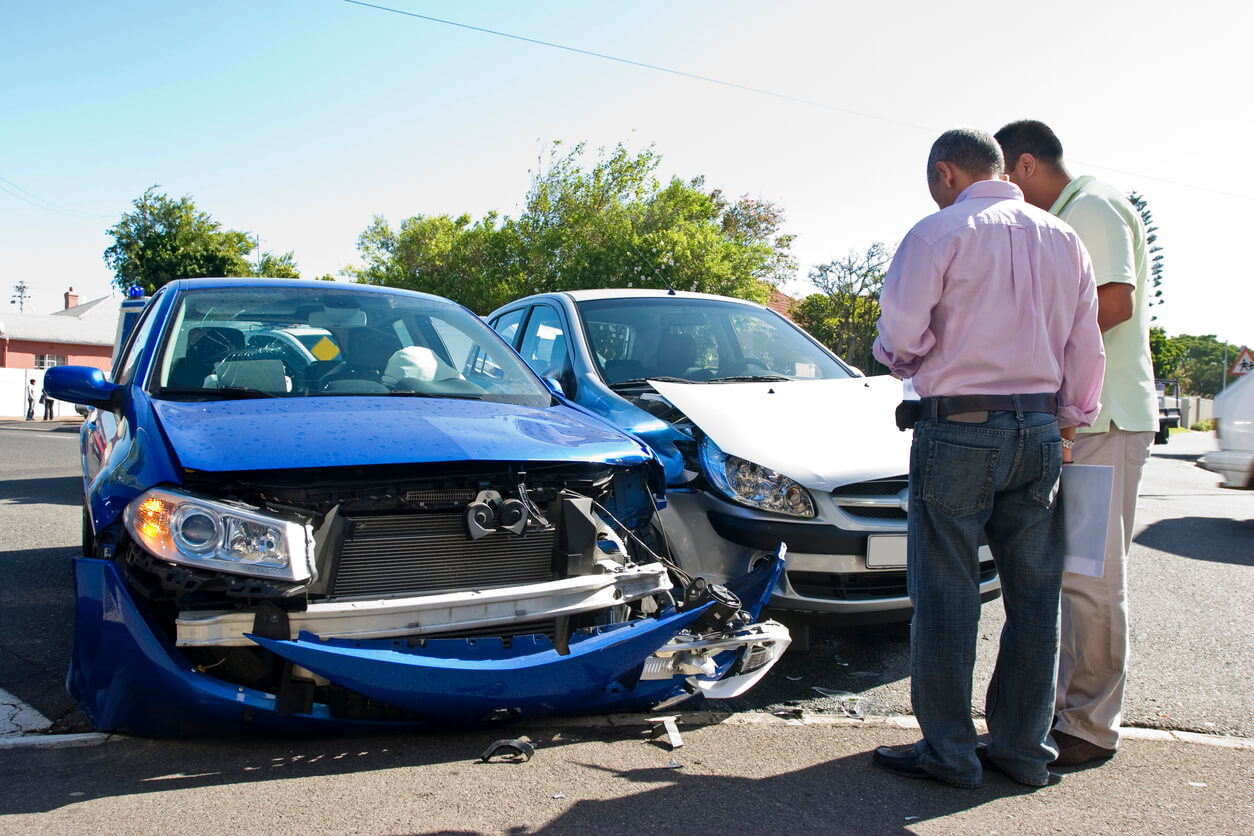
Two drivers surveying a car accident

What Happens If I’m Partially at Fault for an Accident?

When a person is injured due to the negligent or wrongful act of another, the law provides a way to seek compensation for the harm suffered from the negligent party. This is accomplished by pursuing a personal injury claim. Establishing who is at fault in causing an accident is a critical element to a personal injury claim as fault will determine who is liable for paying damages incurred by the injured party. Fault, however, can be complicated. First, it is not always clear who is at fault. Second, there are times when there may be more than one person at fault for an accident.

What Happens If I’m Partially at Fault for an Accident?

One of the very first steps in a personal injury claim is determining who is at fault for causing an accident who, therefore, will be liable for paying damages. It is a fact-specific analysis that may involve looking at things such as any laws that were violated, dangerous driving behaviors, or other indicators that someone was acting negligently and that led to the accident resulting in injuries.

When more than one person is found to be at fault for causing an accident, each state has its own laws dictating how the claim should be handled. Sometimes, a person may retain the right to file a claim against another party despite being partially at fault for an accident. Other times, partial fault will act as a bar to making a claim at all. This, however, is the exception rather than the rule.

You see, pure contributory negligence is a rule that means that even if you are the smallest bit at fault for causing an accident, you will not be able to file suit to seek compensation for the harm you have suffered as a result of the accident. In the alternative is the pure comparative negligence rule that states a person can file a lawsuit despite being partially at fault in causing an accident, but the final damage award will be reduced by their percentage of fault. On the other side is the fact that, under a pure comparative negligence standard, a person partially at fault for an accident will only have to pay for damages equal to the percentage of fault he or she has been assigned. Approximately one-third of states use the comparative negligence rule.

Pennsylvania uses a modified comparative negligence rule, as do most states. States applying the modified comparative negligence rule will either enforce a 50 percent rule or a 51 percent rule. Pennsylvania follows a 51 percent rule which means that a person can only seek damages from an at-fault party if he or she was less than 51 percent at fault in causing the accident. In other words, in Pennsylvania, you cannot be more than 50% responsible for an accident if you want to try and recover damages. 

This means that, if you are partially at fault for an accident in Pennsylvania, you will still be able to seek recovery for your losses if you were 50 percent or less at fault for causing the accident. If the other at fault party seeks to recover a damage award against you, their damage award will be reduced by the percentage of fault he or she was assigned. If you seek damages and are successful, your damage award will be reduced by the percentage of fault you are assigned.

Philadelphia Personal Injury Attorneys

Personal injury laws can be complex and difficult to understand. They do, however, have a significant impact on your ability to recover monetary compensation after being injured in an accident. The knowledgeable attorneys at Cooper Schall & Levy are here to help. Contact us today.

personal injury trial

Will My Personal Injury Claim Go to Trial?

When you think of a personal injury claim, you may have visions of serious courtroom drama. There may be charts and other exhibits along with vehement arguments asserted and expert witnesses being cross-examined. The reality is, however, that most personal injury claims are settled out of court. A demand letter detailing a person’s injuries along with the details of the crash and the harm suffered by the victim is sent to the insurance company and negotiations will usually then ensue. As previously stated, the claim is usually settled prior to the need to go to trial. There are, however, several circumstances where a personal injury claim may be more likely to go to trial.

Will My Personal Injury Claim Go to Trial?

While most personal injury claims do not go to trial as a settlement agreement is reached prior to the need for litigation, some claims do proceed in going to trial. This is nearly always because the insurance company refuses to pay a fair amount on the claim. When the insurance company will not budge and refuses to increase an otherwise too low settlement offer, then a claim may go to trial.

An insurance company may refuse to pay out on a claim or offer an unfairly low settlement amount if there are complex liability issues. If there is a gray area regarding liability, an insurance company will almost certainly work to exploit it. An insurance company will refuse to pay out on a claim or make a low settlement offer because there are issues as to who was actually at fault for causing the accident that led to injuries. They may gamble on the fact that a jury would side with them and that is why they have little incentive to pay out on the claim before going to trial.

It is also more likely for a personal injury claim to go to trial if the injury victim has preexisting conditions, especially if those preexisting conditions have similar symptoms as the injuries claimed to have developed as a result of the accident. In these types of cases, it is more than likely that an insurance company will assert that the injuries are not known, but are preexisting conditions or injuries that the accident victim already suffered from. Based on this assertion, the insurance company may deny the claim in full or in part.

A trial may also be necessary for accidents involving catastrophic injuries. This is because the damage award stands to be a substantial amount. When there is more money on the line, you can be sure that the insurance company will likely put up a fight to get out of paying. They will throw vast amounts of resources in trying to devalue the claim as much as possible. Because of this, it is more likely in catastrophic injury cases and those cases involving potentially large damage awards for trial to be needed.

Philadelphia Personal Injury Attorneys

The tenacious personal injury attorneys at Cooper Schall & Levy do not back down from a fight with insurance companies. We stand up and fight for our clients to help make sure that they are properly compensated for the harm they have suffered. Contact us today.

disabled woman in a wheelchair

An Overview of Personal Injury Law

While you may have heard the term “personal injury law,” you may not know exactly what it means or entails. Personal injury law is a specific area of law that, as the name suggests, deals with those who have suffered an injury. It is a civil area of law established as a means for the injured to seek a remedy for the losses they have sustained as the result of an accident or incident. For more details on personal injury law, read on.

What is personal injury law?

As stated above, personal injury law allows an injured party to seek a civil remedy for the losses sustained in an accident or incident. The intent of personal injury law is for the injured party to receive the compensation that will “make them whole” again after suffering harm due to the negligent or intentional conduct of someone else.

The majority of personal injury claims are based on a theory of negligence. Every person has some level of responsibility to avoid putting other people at risk of harm. While not all harm is avoidable, the harm resulting from a person failing in their duty they owe to someone else may result in legal liability. For an injured party to seek damages from someone else for the harm he or she has suffered, the injured party must be able to show that the other person owed them a duty of care. The injured party must also be able to show that the person breached this duty and this was the direct and proximate cause of the injury.

Once negligence has been established, the injured party may seek compensation from the negligent party for harm suffered as a result of his or her negligent action or inaction. Damages can include property damage and medical bills. Damages can also include emotional distress and pain and suffering, as well as the loss of income and loss of future earning ability. In some rare cases, punitive damages may be awarded. Punitive damages are different from compensatory damages in that they are not intended to compensate the plaintiff, but are instead intended to punish the wrongdoing party and deter the type of behavior that led to the harm suffered in the future.

While personal injury law applies to accidents caused by a person who has acted in a negligent manner, such as car accidents, slip and falls, and medical malpractice, personal injury law can also apply in situations where a person’s intentional acts caused harm to someone else. For instance, a person can make a personal injury claim against an aggressor in an assault and battery case.

Personal injury law is also included in claims involving defective products, or “product liability” claims. In a product liability claim, an injured party can seek damages for harm suffered due to a dangerously defective product. Personal injury law can also include defamation claims where a person’s defamatory statement causes harm to someone else’s reputation.

Philadelphia Personal Injury Attorneys

The dedicated personal injury attorneys at Cooper Schall & Levy are here to stand up for the injured. Whether you suffered harm due to the negligent or intentional acts of another, we will fight for you and your legal right to full and fair compensation. Contact us today.

injury

How Are Pain and Suffering Damages Calculated?

In personal injury claims, there are many levels of hurt and losses to consider and account for. There are physical injuries. There are property damages. There are also those intangible losses. The hurt that comes from the trauma of being involved in an accident and living with the pain of sustaining injuries. While these mental and emotional damages may not be as visible and may be more difficult to calculate than others, they are still very real. That is why you can include a claim for pain and suffering damages when you pursue a personal injury case.

Calculating Pain and Suffering Damages

Damages can be classified into two main categories, economic and non-economic. Economic damages are those that are readily calculable. You can usually present receipts and bills to support an economic damages claim. Economic damages may include:

  • Medical bills
  • Cost of future medical care
  • Lost wages
  • Loss of future earning capacity.

Non-economic damages are much more complicated because there are no real hard numbers to present in support of them. How do you quantify someone’s pain and suffering? Pain and suffering refer to both the physical and mental anguish that can be caused due to an injury. It can include the discomfort caused by living with injuries or even the need to undergo sometimes extensive and invasive medical care to address those injuries. It can include the fear that can come with considering that your life may have been shortened by your injuries. It can account for things like the embarrassment of having to live with scarring or disfigurement due to your injuries. Essentially, pain and suffering damages refer to monetary compensation you may receive for having to live with your injuries and experience all sorts of unpleasantries due to being involved in the accident.

To prove pain and suffering damages, you can present a variety of evidence. This evidence may come in the form of a treating doctor’s testimony as to your pain. It may also include testimony from an expert in the mental health field or a medical expert on the type of injury you sustained and the kind of pain a patient with such an injury may experience. You may also present documentation such as your medical records. Oftentimes, you yourself may be able to provide compelling testimony regarding your own pain and suffering stemming from the accident and resulting injuries.

To calculate pain and suffering damages, insurance companies most often use the multiplier method. With the multiplier method, your economic damages are multiplied by a multiplier between 1.5 and 5. The multiplier depends on a number of factors, primarily including the severity of your injuries. Another method, the per diem method, is not often used. With the per diem method, a set dollar amount is paid to the victim for each day from the date of the accident until he or she reaches maximum medical improvement.

Philadelphia Personal Injury Attorneys

If you have been injured in an accident caused by the negligence of another, you have a legal right to seek compensation for those injuries and associated losses. Pursuing your right to full and fair compensation often requires detailed knowledge of the personal injury process and a tireless dedication to pursuing the legal rights of the injured. That is what the trusted personal injury attorneys at Cooper Schall & Levy are here to do. Contact us today.